Easy fabric christmas bulb ornaments

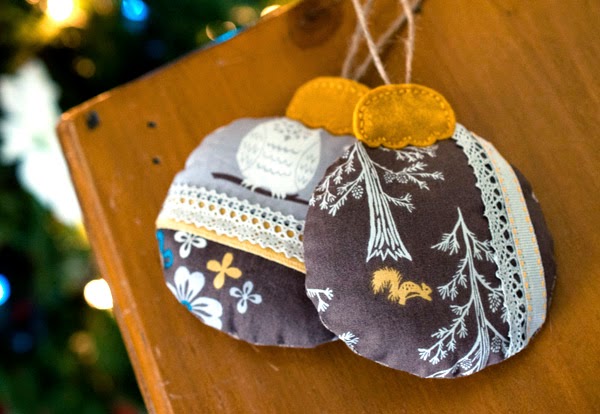
I recently saw this tutorial for fabric christmas bulb ornaments by Jennifer Jangles on instagram and knew it would be a perfect project for the pile of Monaluna Westwood scraps sitting on my cutting table! I love this fabric for so many different uses but I think it really makes a perfect non-traditional holiday fabric.
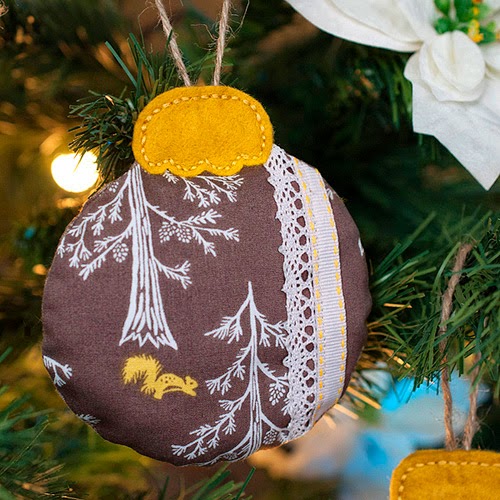
These little bulbs were really quick and easy to make and all you need is some fabric, ribbon and felt scraps. I pieced two fabrics for the owl one and the squirrel is just one piece of fabric. I stitched the ribbons on but you could also glue them in place. 
Then you simply sew two circles together leaving a gap for turning and stuffing and machine or hand stitch the felt caps in place with some twine or ribbon for hanging. So quick and easy and a great project for charm squares or scraps. I think these would be adorable to make as extra little gifts and use them as a topper when wrapping presents.
Fabrics used are organic cottons from the line Westwood by Monaluna, now available for presale at Pink Door Fabrics arriving in early December. 

Pattern Review: The Senna Tote

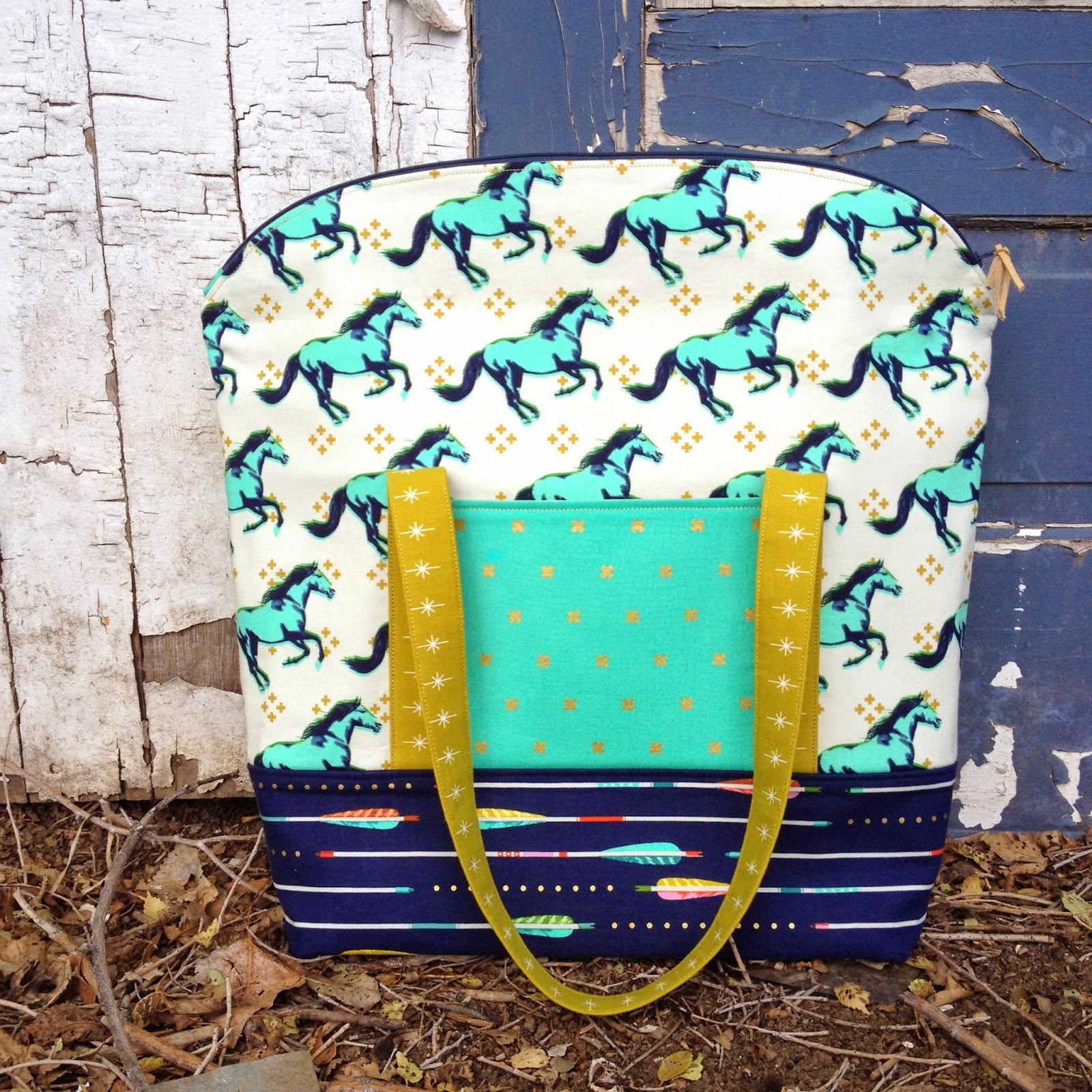
Im so very excited that my Senna Tote was chosen as a finalist in the amazing Purse Palooza event that Sara Lawson of Sew Sweetness hosts each year! There were 22 bags chosen for voting from nearly 250 entries and I’m extremely honored mine is included! (Especially since I nearly lost my mind fussy cutting that star print for the handles 🙂
(Voting is closed but thanks to all who voted for me!)
This is a fabulous bag pattern and it was overall pretty quick and easy to sew up. The pattern is the Senna Tote by lbg studio for Willow & Co. You can purchase a PDF download here.
The size is perfect for an airplane carry on, a weekend getaway or for hauling around goodies at quilt market – which is how I christened mine! It’s not too large to carry around on your shoulder for a day, and while I know some people love large purses, I think it’s too big for that.

As you can see, the top folds over if it not fully stuffed, but opens up for plenty of stuffing space! There is a small pocket on the front (which you can easily add a snap to if desired) and a large pocket on the back that runs the full width of the bag. The bag is fully lined and the pattern includes a large dividable slip pocket, but you could easily customize this or add a zipper pocket, too.

I often find I need to change the layering or interfacing used on a bag to make it as sturdy as I want it, but I did not need to do that with this bag. I did, however, lengthen the handles which is something I always end up doing with bags. I wanted it to fit comfortably on my shoulder without digging up into my armpit. 
If you plan to carry this bag by the handles at your side and are not very tall, you will definitely want to take that into account if considering changing the strap length. You’ll have to find the right balance between fitting it over your shoulder and carrying it in your hand without it dragging on the ground. I also found myself carrying it hung over my forearm, which worked out well.
Im considering trying something different on my next one, making shorter carrying handles and adding an adjustable, removable single shoulder strap. My mom suggested that if you are using it as a carry on, the shorter handles would make it easier to hook over the handle of your rolling suitcase when wheeling through the airport or to hang from a stroller if using as a diaper bag. I’ll be sure to let you know how it goes!

Cutting and interfacing all the pieces of this bag took me much longer than sewing, but I was also cutting all directional prints or prints that required fussy cutting. I was deliberate in my placement of the arrows and where the full horse images would fall. Plus, I’m totally OCD, so there’s that.
Sewing was quick and the only part I fussed with was the areas at the end of the zippers when sewing the bag together at the last step. Topstitching around the zipper wasn’t too bad, I just didn’t get all the way to edges, but I have seen a couple leave this step out with no problem.
You will need a machine that can handle thickness for the bottom portion of the bag, but there arent any tricky or tight places to get into.
Im planning to make another one with a leather bottom and straps and will share pics when it’s done!
If you’re making this bag and have any questions, feel free to leave a comment below or email me anytime! (nicole@lillyella.com)
Thanks for visiting!
~nicole

Pattern Review: The Piper Top & Dress

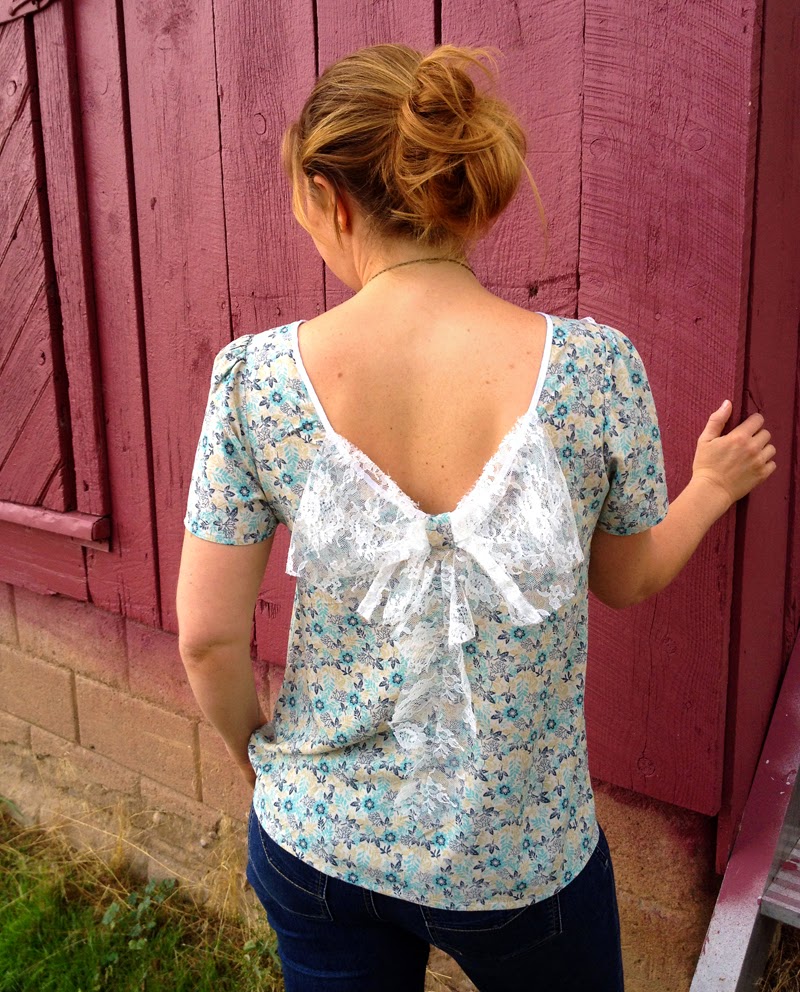
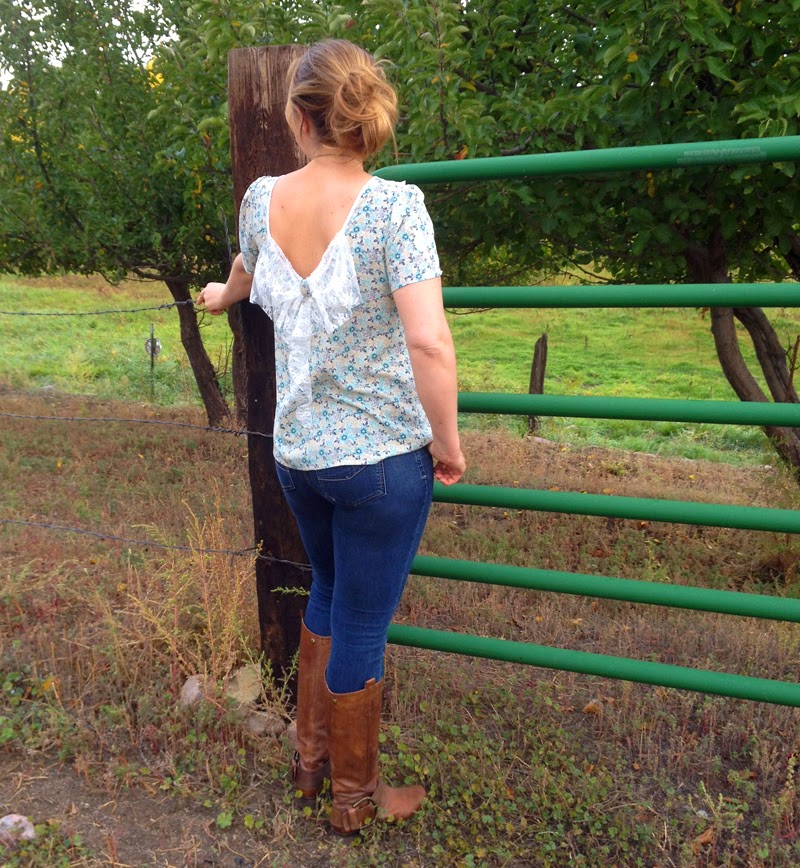
I can’t remember where or when I first saw this top, but I was hooked at first glimpse of that adorable big bow on the back. This is the Piper Misses Top & Dress pattern by Violette Field Threads and you can find it here.
This is the third garment I have made, the first two being the Wiksten Tank and the Flirting the Issue Skirt which are very simple, so I thought it was time to step up my game with gathered sleeves and bust darts.

This pattern was definitely more complex than the other garments I’ve made, but overall I’d still call it easy. 

The pattern calls for regular seams (vs french seams) and to finish the raw edges with a zig zag stitch, if desired, or a serger. There is a simple gather on the shoulder and you use 1/4″ bias tape around the neckline, which was tiny, but lots of pins and a slow stitch speed did the trick.

I made a muslin in medium to check the sizing and found it a bit large, but I was worried the small may be too small so I went with a hybrid in-between size. In the end it still came out a bit larger than I wanted, mostly in body width, so I will try a regular small next time but may need some adjustments in the armholes and placement of the bust darts because of my height and long torso. That being said, I think the pattern sizing runs a tad large. 
It isnt meant to be form fitting but the problem I found in having the width slightly too large is the shoulders are more likely to slide down because of the wide open back, so even though the fit throughout the body isn’t as important, getting the proper width in the shoulder area seems to be.
I made this top using a polyester for the body with lace collar and bow accents. NEITHER were easy to work with, though I am very happy with the drape and feel. The polyester was slippery, similar to working with rayon, so it was hard to cut accurate pieces and required lots of pinning. Same went for the lace.

I wasn’t able to finish the edges of the lace on my machine so I’m not sure how it will stand up to washing, but I did prewash the lace before making the top and I think it will hold up pretty well.

I found adding the sleeves to be the trickiest part for me. The technical skills required weren’t difficult, but I did have a little steam coming out of ears trying to figure out the proper way to lay out all the pieces and attach the sleeves. Ultimately it’s not complicated, but the photos in the pattern are too close up to see what you’re actually looking at. At this step, the front is one piece but the back is in two pieces and they are attached at the should seams. It just takes a little logic and maybe simply more garment experience!

I made a couple minor changes along the way. First was the collar. The pattern includes a cute peter pan collar but I wanted to use the pretty scalloped edges of my lace so just did a little improv there and am so pleased with how it came out. I also shortened the top several inches. I found the length for the top as written in the pattern to be much too long for my preference and a little awkward. If I had made the length as specified, I would have had to modify the width at the bottom to fit around my hips and rear as it was tight before I trimmed and hemmed it.

The pattern includes a long sleeve option with gathered cuffs as well. I made the short sleeves as written though may shorten them to more of a cap, which is just a personal preference. Also, as the name indicates, the pattern includes instructions for making a dress, which I may just try!


Overall I am very happy with my finished top and will definitely be making another. I recommend checking your size with a muslin first, as this top was time consuming enough to want to get it right the first time! If you are unsure, try sizing down first. Between cutting and all the assembly steps, you can expect to spend the good portion of a day, if not a full day, working on it.

I love the look, feel and drape of the polyester and lace, but it was hard to work with. I wouldn’t recommend a stiff or thick cotton because I think the body needs some movement, but any quilting cotton or voile would probably be lovely. The collar and bow also lend themselves wonderfully to creative fabric choices.

If you are adventurous and have experience with bias tape, this would definitely not be too difficult to attempt as a first garment pattern.

If you have any questions, feel free to leave a comment below or shoot me an email nicole@lillyella.com.

Happy sewing!

A new tote for Quilt Market

I had to do some selfish sewing yesterday to keep my mind of my horrible cramps and pounding headache (the joys of being a woman!), so I made a new tote to take to Quilt Market in October!
Overall this bag was fairly quick and easy to make, but it did take me all day because I was figuring most of it out as I went. If I were to make another it would probably take half the time, if even.
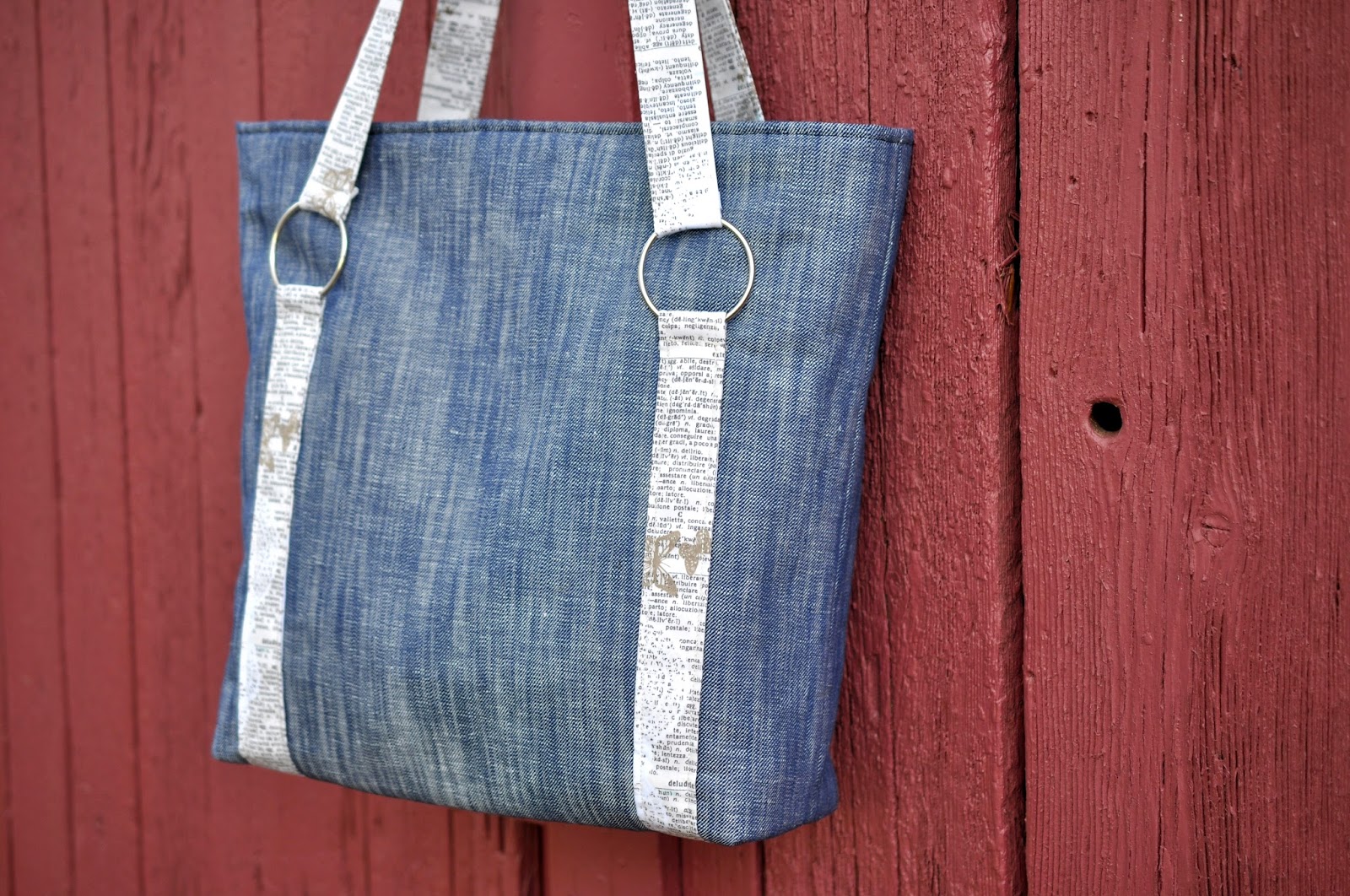
The design is based off the tutorial by Sara Lawson (Sew Sweetness) for the Sawyer Bag, which you can find here. I changed the size, interfacing/lining and added a front pocket (specifics below).
I wanted something big enough to hold my camera, a bottle of water, food for the monster (my belly), as well as whatever else I pick up along the way, but I didn’t want to carry a beach bag on my shoulder all day. This bag ended up being about 13.5″ square by 4″ deep.
I cut my main panels 18″w x 17″h and increased the corner seam distance to 2″ for a slightly deeper bag than the original. I cut the lining panels to the same width but 1″ shorter on height so it wouldnt be bunchy inside.
I wanted it to be strong and sturdy so for the main outer panels I fused fusible fleece to my body fabric (robert kaufman rustica chambray) and then basted it to a layer of canvas. I used shapeflex interfacing on the lining and used a piece of peltex in the bottom of the bag. 
My old necchi handled the bulk like a champ, so as long as you have a machine that can handle thickness, it was easy to sew. No tricky corners or awkward maneuvering, just long straight seams. I’m very pleased with how it came out and would not change anything about the lining or interfacing next time.
I made the straps slightly wider and set them in 3.5″ from my outer edges before assembling the bag. I wanted to see a little more body from the front (the original has the straps at the edges of the bag.) I also adjusted the length to my preference.
I only added an outer pocket on one side, mostly because I wanted to finish the bag in a day, but I also like the simplicity of it without a pocket. Realistically I’ll always have one side against my body so wouldn’t use it much anyways.
I had the metal rings on hand and love how they look but you could use different shapes (such a D rings or rectangle rings) or even leave them off completely and make one long strap without the split for the ring.
I used two fat quarters I had on hand (fabric is Harmony by Jessica Swift) for the lining and added a divided slip pocket. If I had more time or patience I may have added a zip pocket on the other side of the lining, but for the purpose of this bag, I don’t think I’ll miss it.
I’m just in love with this chambray. I want to make all the things out of it and a skirt is definitely next on the list. The outer pocket fabric is from the Botanics line and the strap is Indelible. The combination of patterns and textures just makes my heart sing.
What do you think? 
Have a great week friends!

Name it & Win > My Vintage Pyrex Cozy Pattern

Boy, I’ve been busy. I know, what else is new? So many fun things are coming soon including a new line of jewelry designs and my first line of sewing patterns! I’m working on dividing lillyella into two ‘divisions’ (I feel so important), working on new logos, new websites, a new blog.
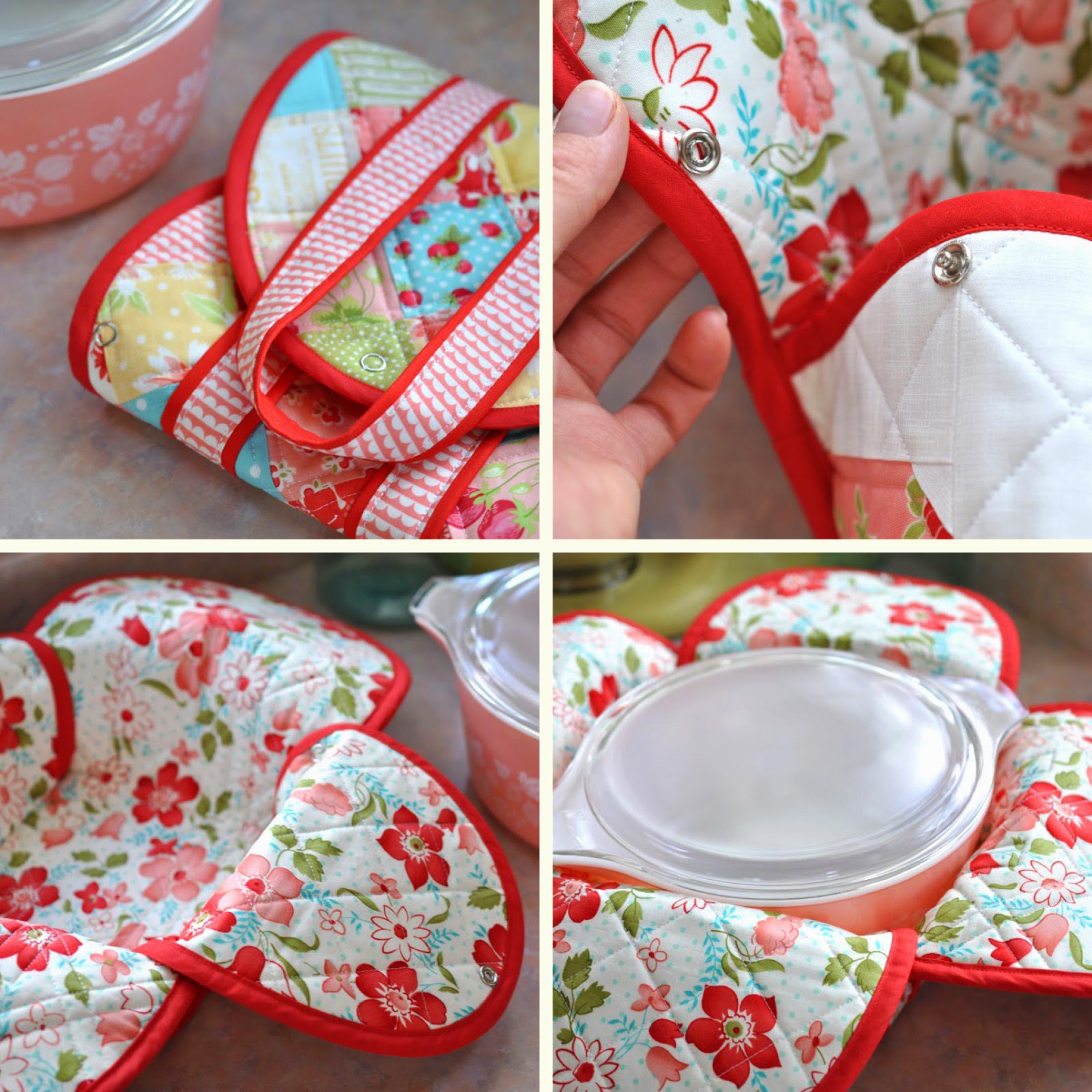
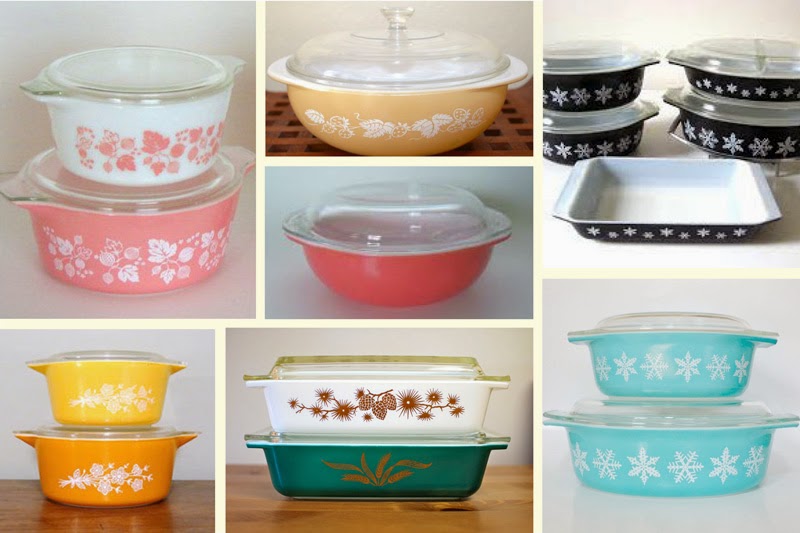
But in the meantime I’m just gonna jump right into a peak at my line of patterns to make insulated carriers for vintage pyrex dishes. I’ve wanted to create these for awhile now and am so excited to finally be here. 
As usual, I’m stumped on a name, so who remembers my Name Game? it was always so fun (and successful!) so, let’s get it on! 
Read on to learn more about the pattern and leave a comment below with your name idea or ideas (limit 2 per person). If I pick your name, you’ll win copies of the entire line of patterns and maybe even a piece of vintage pyrex 🙂
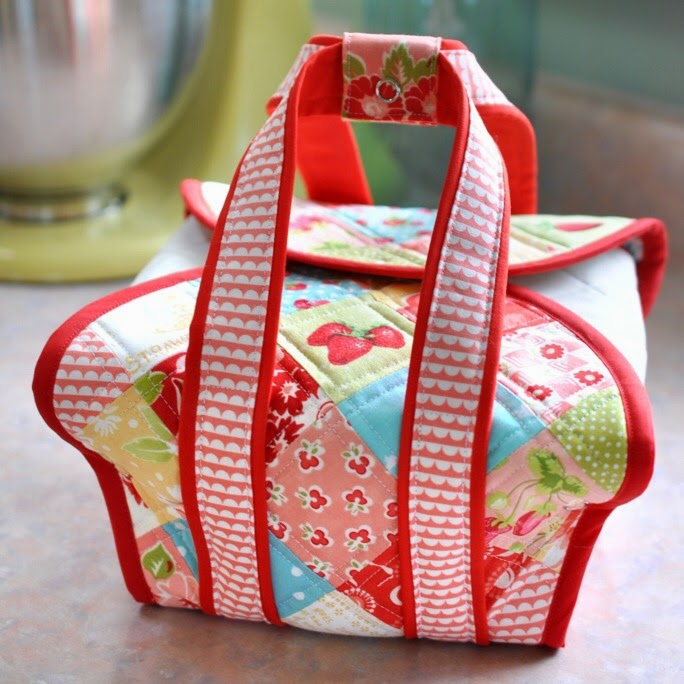
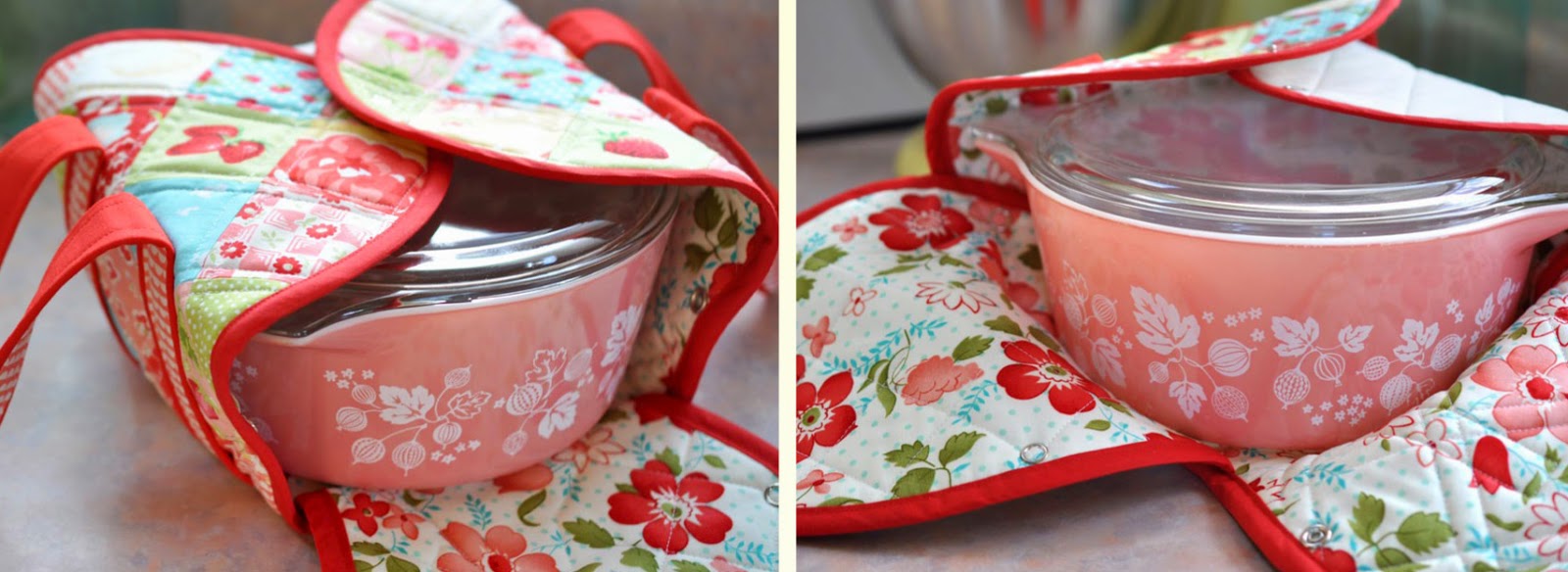
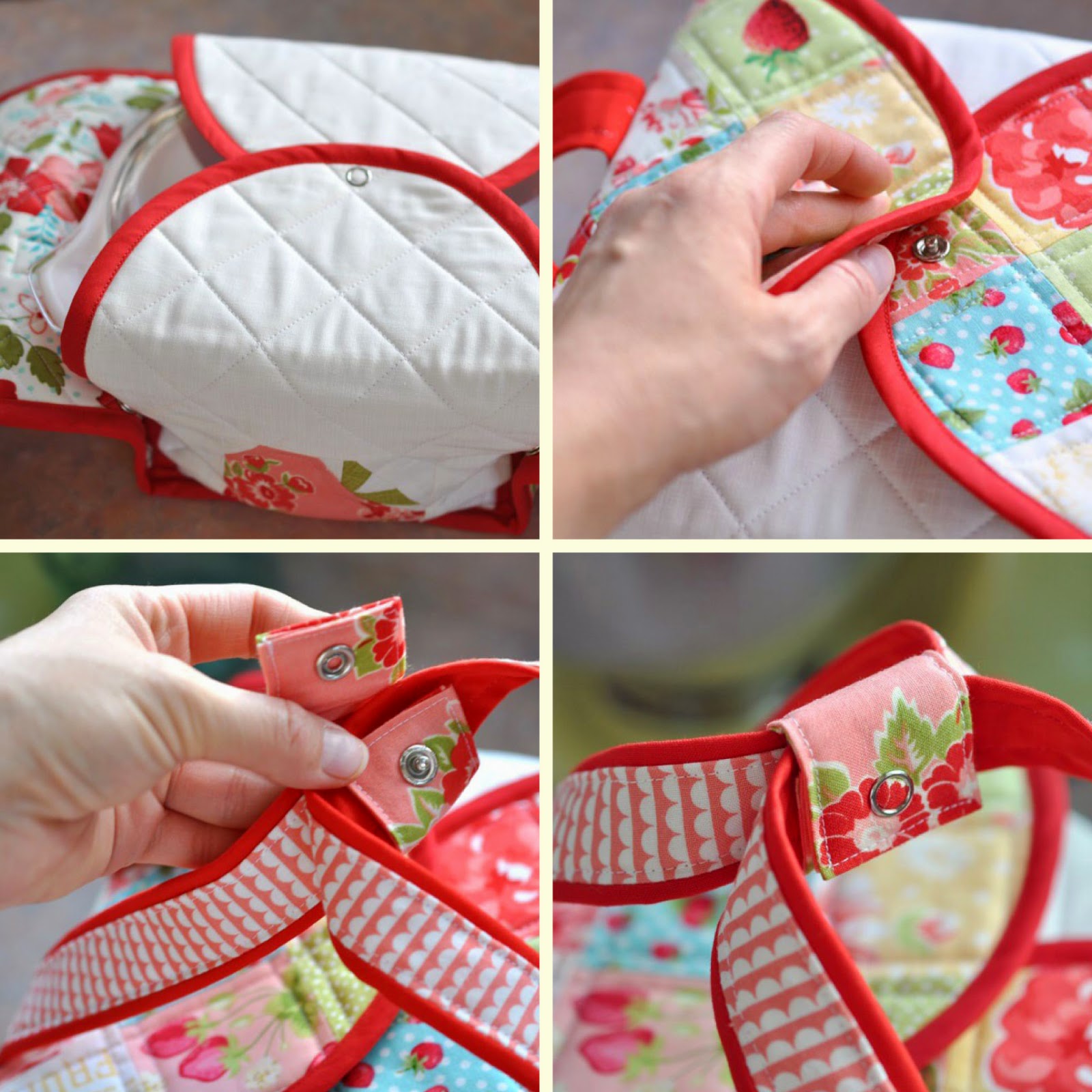
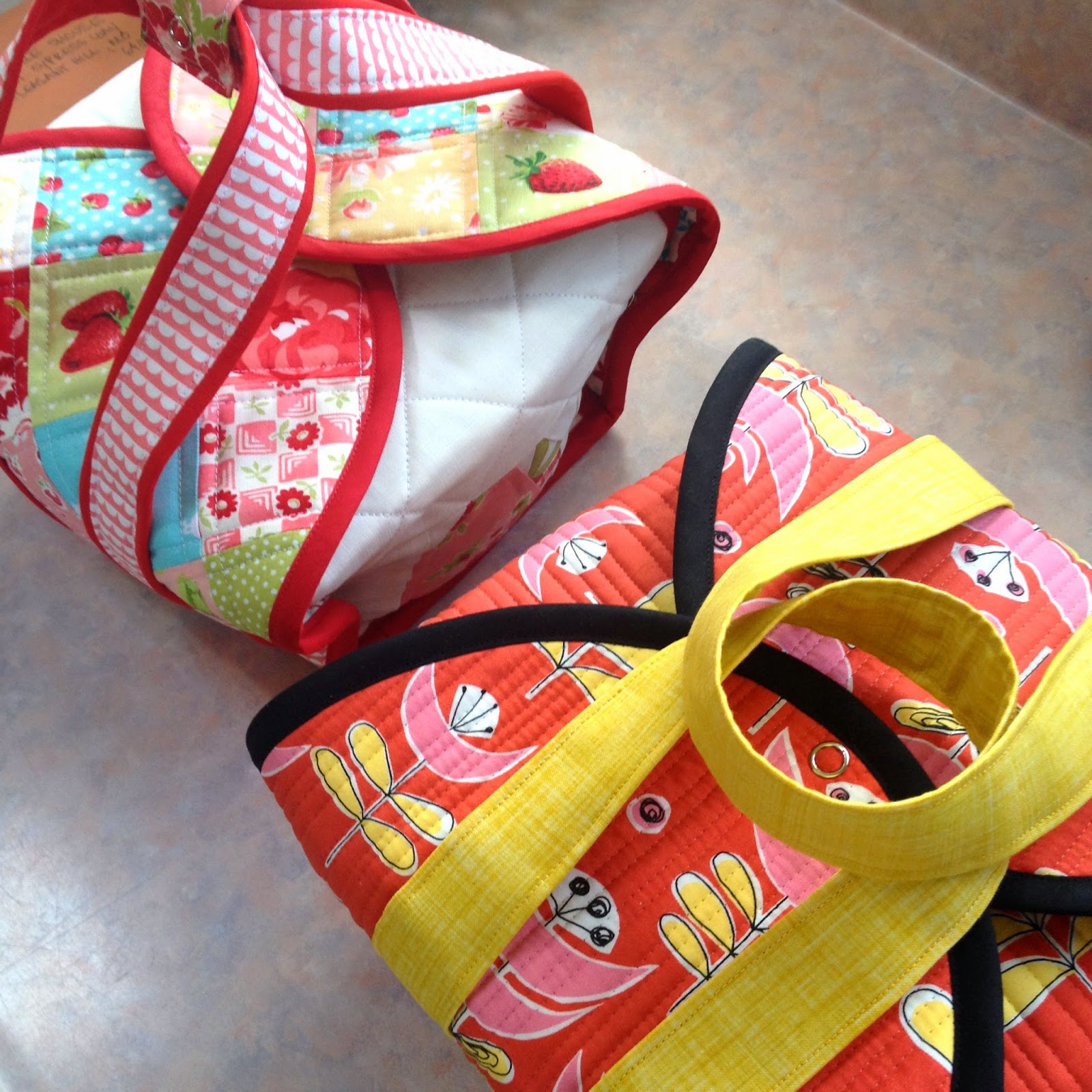
These carriers are made with an insulated inner layer, like a pot holder, so they keep hot food hot and cold food cold and are perfect for transporting to a picnic, potluck or dinner party. They fold up flat for easy storage and snap together tight on the sides and top to securely hold the dish.
The first pattern released will be for the 475 and 474 round casserole dishes and then for the 043 and 045 oval casseroles, the 024 bowls with two lid styles, the divided one and a half quart casserole dish and the rectangular space savers.
I have a handful of ideas but none have really screamed at me yet, so I’m excited to see what all your creative brains come up with! The contest will be open thru Friday, August 29.
If you have any trouble leaving a comment from a mobile device, you can email me your entries to nicole@lillyella.com or you can enter on my instagram post starting tomorrow (Aug 26). 
Thank you and have fun!

tutorial: modifying a two way metal zipper {perfect for the noodlehead cargo duffle}

I’ve been doing a really good job accomplishing the goals I set for myself lately (probably because they have all been crafty and fun, but… still counts for something in my book). I saw the nooodlehead cargo duffle bag pattern last year and immediately put it on my to-do list. With holiday gifts finished and the encouragement (and 24/7 on-call help) of my friend, Sandra, it was game on!

I hope to finish my bag this week (update: finished my first one, pics below, more to come!) and will write more about the project then, but in the meantime I wanted to share a little tutorial. While browsing pictures of other peoples’ bags, I came across this post on Thread Riding Hood on how to modify a two-way zipper to open from the center, but it only applied to a plastic zipper and mine was metal.

Since I had extras, I decided to try an experiment which happily ended in success! (Those are the best kind of experiments, aren’t they?).

The cargo duffle I’m making calls for a 26″ coverall zipper, but this tutorial would work on any length two-way zipper for any type of project, as long as the teeth are the same on both sides.

A coverall zipper is made for just that, coveralls, and is a two way zipper designed to unzip from both ends. Since I’m not usually hangin’ out in coveralls, I most typically see this type of zipper on coats (which I think is SUPER handy, by the way).

But when it comes to a bag, it’s much more convenient to have the zipper open from the center, so here’s how to do it. You’ll need a pair of side cutters, or similar small wire cutters with a pointy end, and needle nose pliers. (Click on any photo for a larger view.)

I was able to modify this zipper because the teeth are the same on both sides, as I mentioned. I’m no zipper expert, but it’s my understanding that this is not the case with all zippers so be sure to check before tearing one apart.

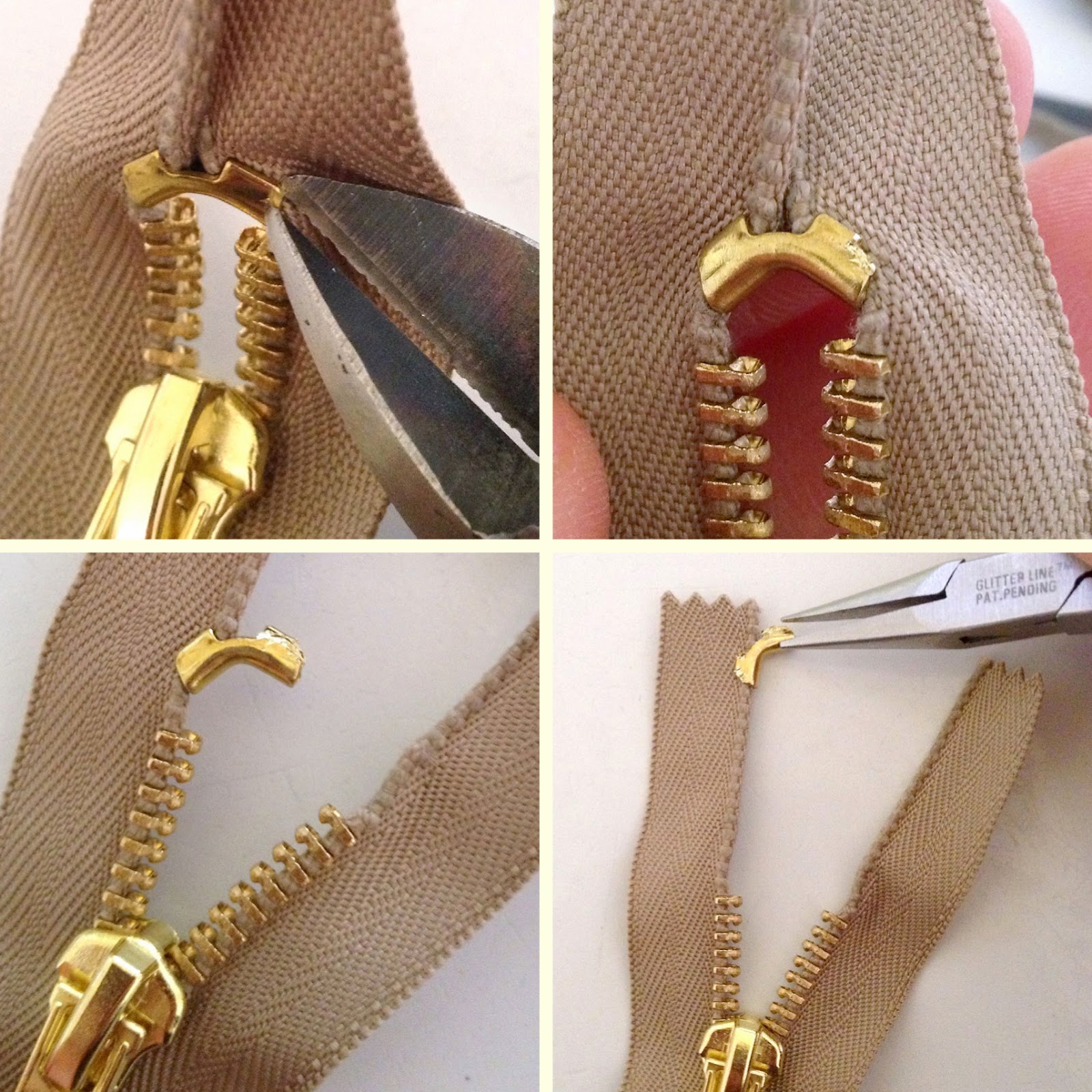
The first step is to remove the stoppers from both ends.

They are clamped down pretty darn tight (which I guess is a good thing) so this was harder than I expected it to be, but it just takes a little elbow grease and patience.

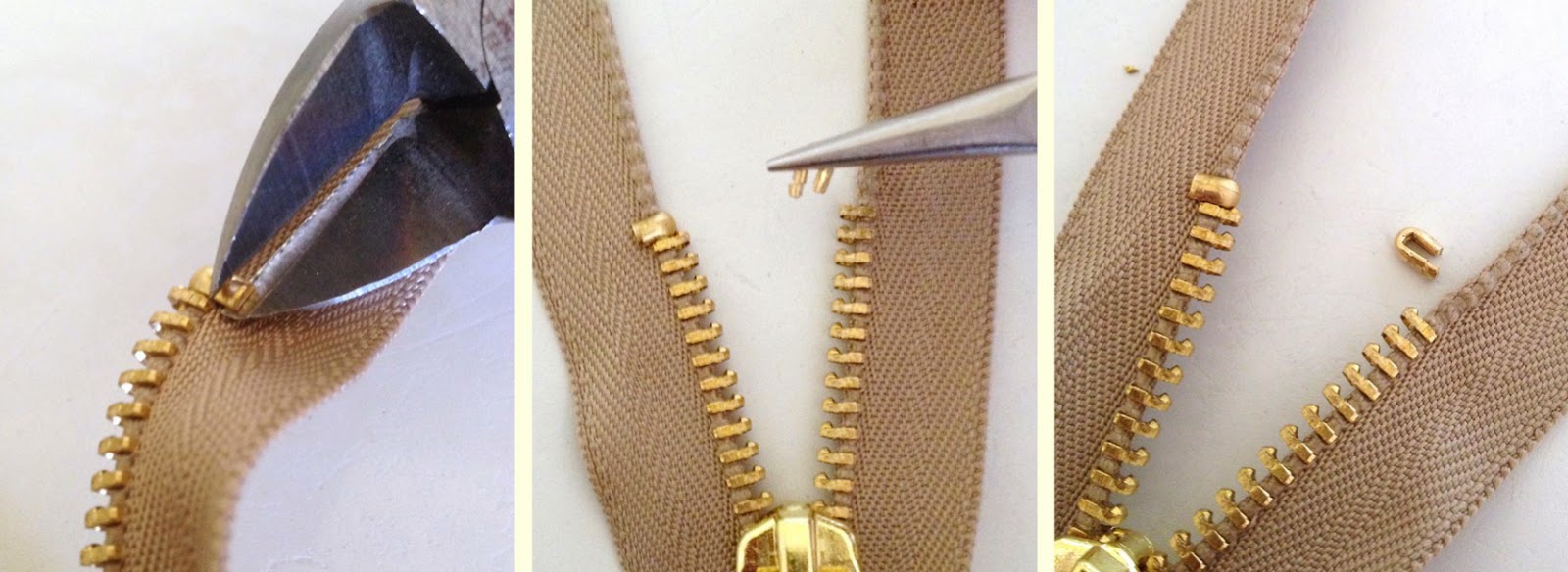
Start by carefully wedging the tip of your cutters under one side of the metal stopper and clipping off little bits of metal at a time. Be careful not to snag or cut the fabric tape.

Keep snipping away until you loosen the clamp enough to pull the stopper from the tape. Once it is free on one side, you should be able to slide it up and off the other side. If it is too tight, repeat the same process of clipping the metal away until it’s free.

The stoppers on the other end are thicker, but are also easier to pry off. First wedge the tip of your cutters underneath and try snipping. If the metal is too thick for your cutters, a bit of wiggling and prying should loosen the clamp enough to be able to pull it from the tape.

Repeat on the other side.

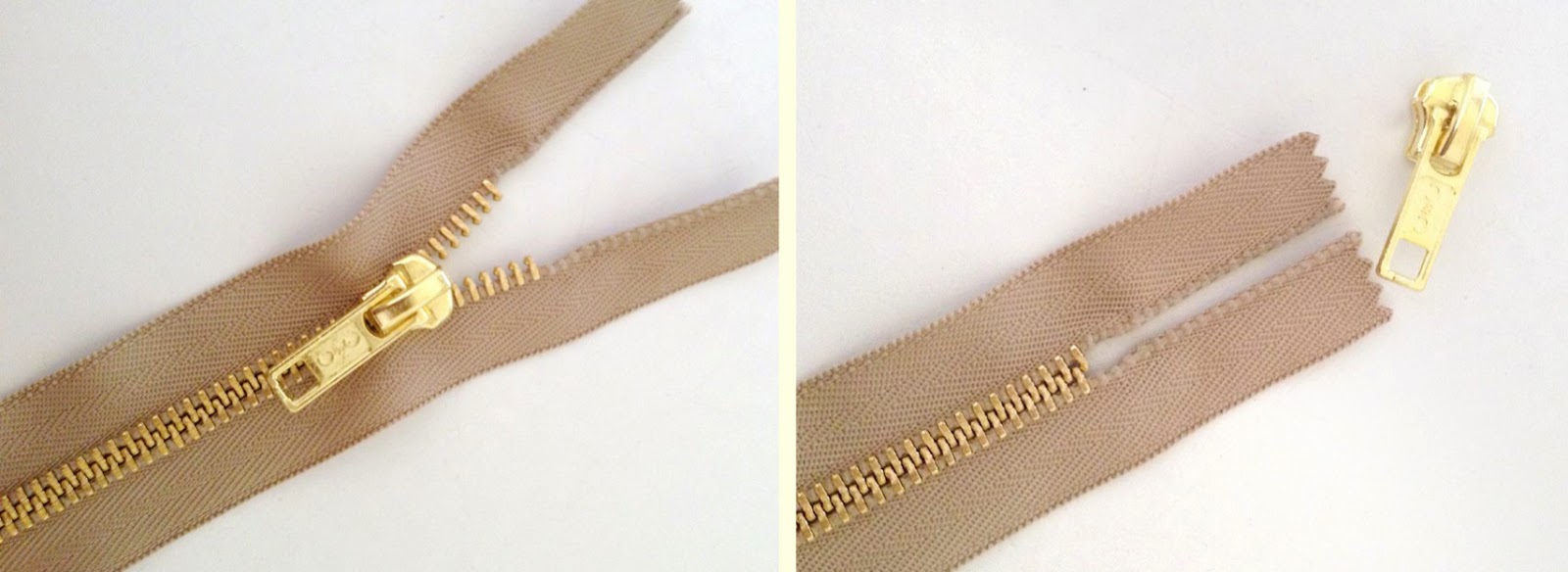
Once the stoppers are removed, move the sliders toward opposite ends so the zipper is closed and pull one slider off as shown above. It doesn’t matter which one.

The opposite end of your zipper will still have the other slider attached. Keep it on and pull it down to open the zipper a bit.

You will now put the loose slider you removed onto this end (toward the slider still on the zipper) by inserting the ends of the fabric tape into the channels of the slider and pulling it down until it catches the teeth, making sure they are lined up.

And Voila! Both your sliders are back on and your zipper now opens from the center.

Depending on your use for the zipper, this may be your final step, but be aware that the sliders are free to come off either end. If you are not sewing your ends into your project or if you have large gaps, you’ll want to make a tack stitch at the ends of the teeth or sew a piece of fabric onto the tape ends.

In the case of the cargo duffle that I’m making, one huge bonus of this modification is that I can take my zipper apart and sew the two sides on independently without having to maneuver around the sliders or deal with the bulk. Go ahead, pump your fist in the air and yell awesome!

If you do this, I recommend marking the ends of your tapes so you can put them back together properly. Technically, the teeth will go back together either way and there is no top, bottom, front or back with this specific zipper, but the length of the fabric tape is different on the two ends so they will be uneven if not matched up the same.

Once you’re done sewing, you just slip your sliders back on either end toward the middle and huzzah! Magic.

I hope you find this tutorial helpful! If you have any questions, just leave a comment below and I will do my best to answer them.

Thanks for visiting and happy sewing!

{UPDATE}

Since writing this post I have finished my first cargo duffle, hooray!

I certainly hit a few hiccups along the way and learned some important things to change and modify on the next one, such as adding zipper tabs on the sides, reinforcing the handles and using sturdier interfacing, but for my first bag project EVER I’m so thrilled with the results! I’m almost finished with my second duffle so will share more then.

p.s. I’m lillyellasworld on instagram if you’d like to follow and see my progress!
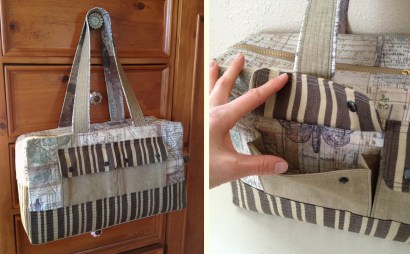

{Fabrics used: Main body, bottom accent and pocket flaps are Tim Holtz Eclectic Elements – Melange and Ticking Stripe. Pockets and handle accent are Robert Kaufman Quilters Linen in taupe}

hobby #727 (and a little pillow giveaway!)

I just have to start by reminding everyone that it’s October! (As if anyone could forget.) It’s my favorite month and the start of my favorite season. Me and summer just don’t see eye to eye, I’m an overall better person when the air is cool and there are pumpkins everywhere! I’m extra excited about fall (and winter!) this year because I am finally out of the North Carolina climate and planted somewhere that actually gets cold. I mean single digits and below zero cold. Sorry NC friends, 30° is not cold! 🙂
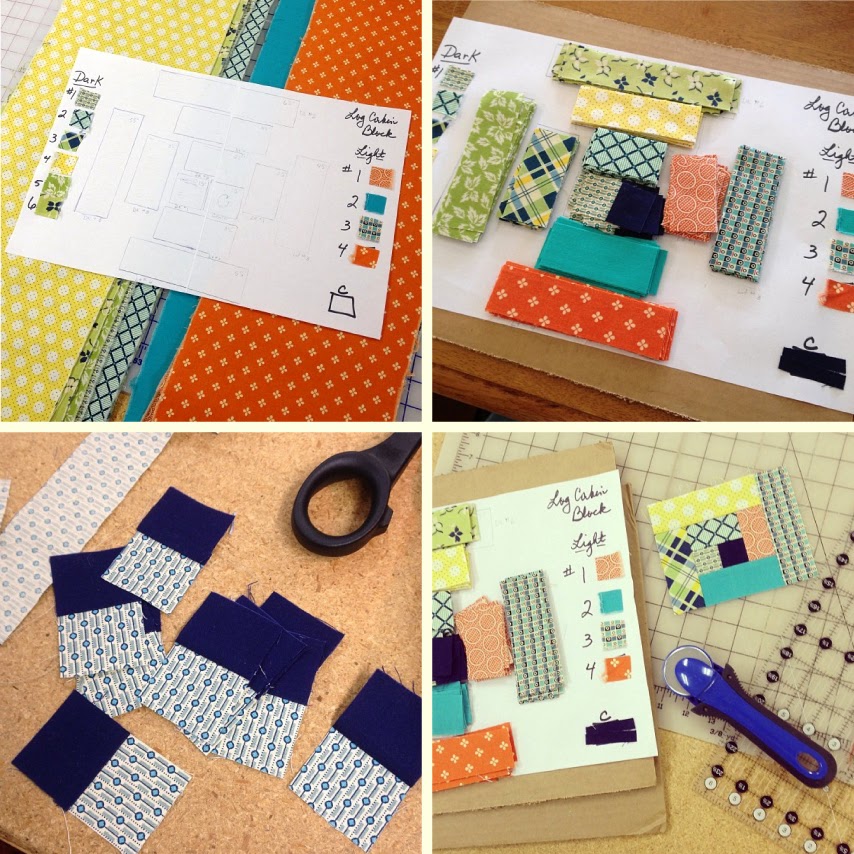
So, onto the topic at hand, my newest hobby. I was destined to be a quilter, I could feel it in my bones, it was just a matter of the right time and place to jump in. It was at the top of my bucket list after the move and crazy enough, it all fell into place! I found a local shop that offers classes and took a beginners class about a month ago. Totally hooked! The class project was a 36″ square log cabin style quilt. The hardest part for me was choosing fabrics, but I just had to keep telling myself that it wouldn’t be my only quilt, so I picked something I loved and went with it.

It was a blast! Like anything, learning the basics and having the right tools make all the difference, but I do believe this is a craft of patience and the OCD perfectionist in me doesn’t hurt either. I’m still pretty slow at it, but now that I have a space to keep my machine and supplies out, it doesn’t matter! I can work when I have time and not stress about it. The hard part will be finishing a project before starting a new one, I already have four new quilts in the works and am out of work space!
GIVEAWAY TIME!
I had a ton of extra fabric strips leftover from my first project so I just kept sewing up more squares! I thought they would make an adorable little pillow, was I right? This also gave me a chance to practice actually quilting a piece on my machine and was my first experience with piping. I lost a chunk of my right index finger, but otherwise a smashing success (I promise, it’s not inside the pillow).
I thought it would be fun to give this little pillow away and brighten someone’s day! 
To enter, please leave a comment below telling me who you plan to give gifts to this holiday season (family, friends, co workers, etc) and what you are planning to give (homemade or bought). 

Just be sure your first name and email are included in your profile or your comment. I will draw a winner randomly on Monday October 7.

Happy October! ~ nicole

Crafting: Fabric Rosettes

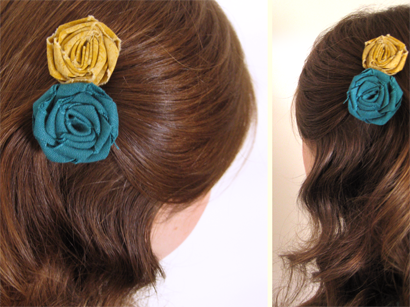
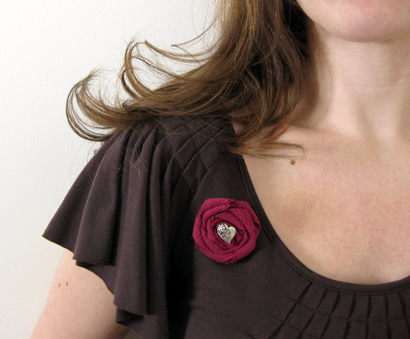
I’ve been doing a lot of cooking and not as much Crafting here lately, but I’m back on track and have a fun little project for you that satisfies my love of both accessories and fabric. It’s also perfect for making Valentine’s Day gifts for your friends and family or just for yourself! Today’s tutorial shows you how to make fabric rosettes which can be used on brooches, hair clips, necklaces, home decor projects and more.
What you’ll need:
fabric
felt
cardstock
pins
scissors
iron
craft glue (I use E9000)
pin backs, hair clips, bobby pins etc
buttons, beads, misc embellishments (optional)

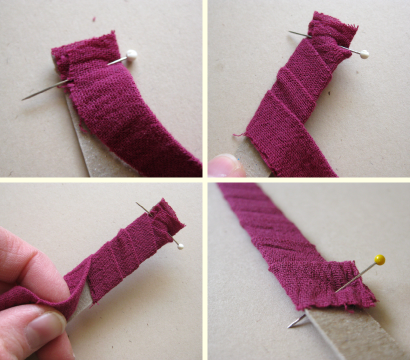
Start with a strip of fabric 1″ by about 20″ – 25″. (I cut a 1″ strip the height of my fabric, then cut it in half. Many fabrics are 44″ so you end up with a 22″ strip, but some do vary which is ok.) You’ll need one strip of fabric per rosette.
Fold the strip in half and press with an iron.

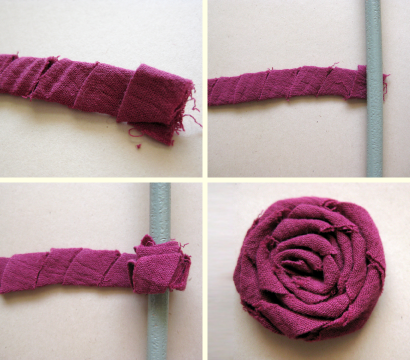
Cut a piece of cardstock (or cardboard) 1/2″ x 11″ (or the height of your stock). Pin the folded fabric strip to the cardstock and begin wrapping it around on an angle, not too tight. Secure the other end with a pin and press with the iron.
Once completely cooled, slide the cardstock out, keeping the wrapping as is. Fix any spots as necessary and press again with the iron.
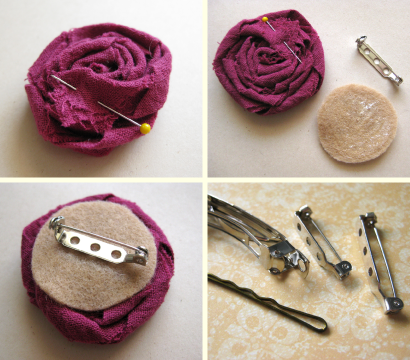
To form the rosette, roll the strip around a pencil starting at one end. Once rolled, slide the pencil out and begin to shape the rosette by spreading it out a bit and twisting the center with your fingers if needed. Secure the loose end on the back with a pin and lightly press again with the iron to flatten it a bit.
Depending on what you will be doing with your rosette, you can either stitch it together or you can glue it to a piece of felt (remove the pin before glueing). Ideally you’ll want to use a piece of felt that is close in color to your fabric but I just used what I had on hand.
You can then glue or stitch a pinback, bobby pin or hair clip to your rosette or sew it onto a shirt, bag, etc!
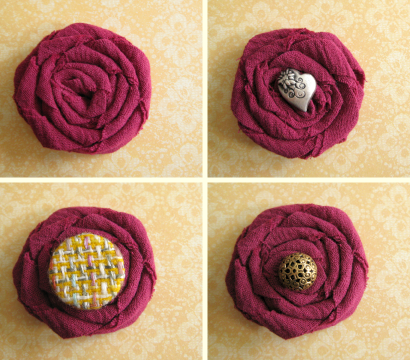
While I love the look of the simple rosettes by themselves, you can also embellish the center with buttons or beads which can be glued or stitched into place.


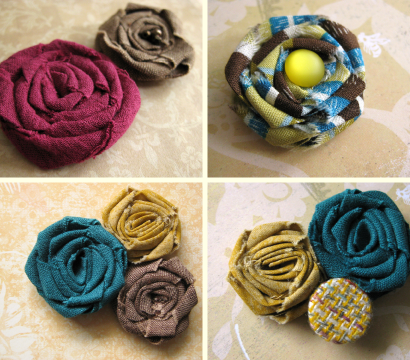
You can create rosettes in different sizes by using a longer or shorter piece of fabric or wrapping them tighter or more loosely. You will also find the type of fabric you use will affect the size of the finished rosette. Above can see how different embellishments really change the look of the finished piece.

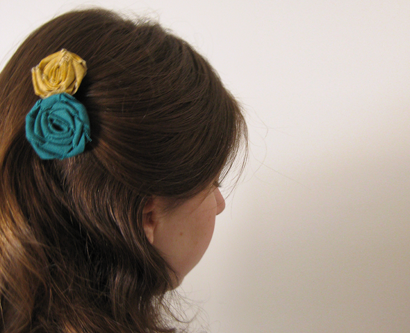
If using more than one rosette on a hair clip, brooch or necklace, glue them to a piece of felt and trim the excess felt once dry (shown a few photos up). You can then embellish and glue to a hair clip or add ribbon or chain for a necklace.
These would also be darling stitched right onto a tank top strap, across the top of a tshirt or onto one side of a cardigan. Oh, the possibilities!

A variety of materials, colors and textures creates a nice grouping and you can also add other elements, such as buttons or charms, to create a unique cluster or fill any gaps between rosettes with beads, pearls or scraps of trim and lace. Just have fun and experiment! And if you do, I’d love to hear about it. Happy crafting!

Crafting: Ruffle Necklaces

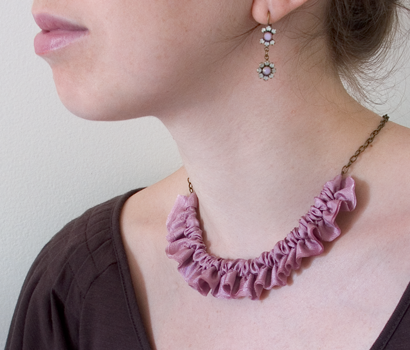
I’ve been swooning over the Candace Ang ruffle necklaces I’ve seen in magazines, but since I don’t have $200 to drop (and you probably don’t either), today’s project is an easy way to make one for yourself! It’s fast, you don’t need much and the results are just beautiful.
I used silk fabrics for this project but you could use any fabric that is thin enough to ruffle easily. Once you choose a fabric, you’ll need to pick a chain. You can use a chain you already have, deconstruct a piece of vintage jewelry or you can buy lengths of chain from your local craft store, in which case you will also need a clasp and some jump rings.

You will start by cutting a strip of fabric and the size will be dependent on the chain you are using, how many ruffles you want and how big you want them. For the pink necklace, I used a smaller chain and wanted shorter ‘tails’, so I cut the fabric to 2″. For the patterned silk shown above, I chose a chunkier chain so cut that piece to 2.5″. The fabric was in half yard pieces so I left the length as it was at about 18″.
Once cut, you can seal the edges of the fabric with Fray Block, Fray Check or another similar product, or heat seal them, if desired. I left the pink edges untreated because I don’t mind a little fray!
Fold the fabric strip in half and pin in place.
Next you will sew a sleeve for the chain. Be sure to make it large enough for the chain to fit through will a little extra room. When sewing, leave about 6″ of thread at the beginning and end and do not backstitch.
To create the ruffles, pull on the back thread (the bobbin thread) while scrunching up the fabric. It takes a little work to get the entire length ruffled but it will happen! I scrunched the fabric down to about a 7″ length. Knot the ends of the strings and trim them flush.
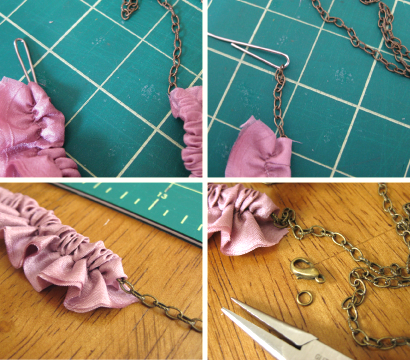
Next you will feed your chain through the pocket. You can use a safety pin or bend a paper clip to help feed the chain and it works best to have a rounded edge at the front so it slips through the fabric easier. If you are using a vintage or existing chain, you may need to remove the clasp or closure from one end to fit it through.
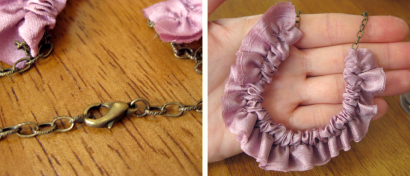
Once the chain is through you can attach (or reattach) your clasp. You can find clasps and jump rings in different metal finishes at most craft stores and you just need one or two pairs of needle nose pliers. You then have your finished necklace! 
You can easily modify this design by using different sized fabric strips and different styles and sizes of chains, the possibilities are endless! Use luxurious silks and satins for a fancier look or try springy lightweight cotton prints for a more casual piece. You can also sew on embellishments such as pearls, bead, rhinestones or fabric flowers.

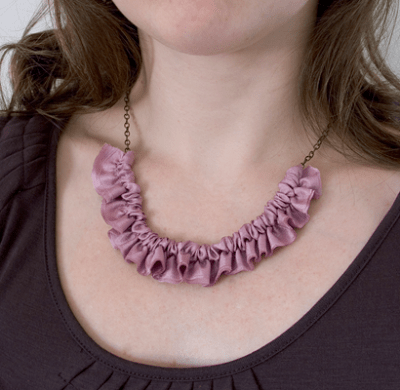
You could wear this necklace with a cocktail dress for a special occasion or with your favorite tshirt and jeans. It looks great worn as a choker like in the very top photo and also looks nice worn longer with a scoop neck shirt or off the shoulder top.
I have a couple more of these in different styles and sizes started that I did not have time to finish, but I will post some photos as soon as they are done. Maybe I’ll even give one or two away! I’d love to hear if you try your hand at this project, I hope you enjoy it!