Crafting: Anthro Style Rope Necklace

The first thing I thought when I saw the Curls & Coils Necklace at Anthropologie was, ooo cute! Then the next thing I thought was, I can totally make that. But more importantly, I can totally make that for 1/8 of the $42 price tag.
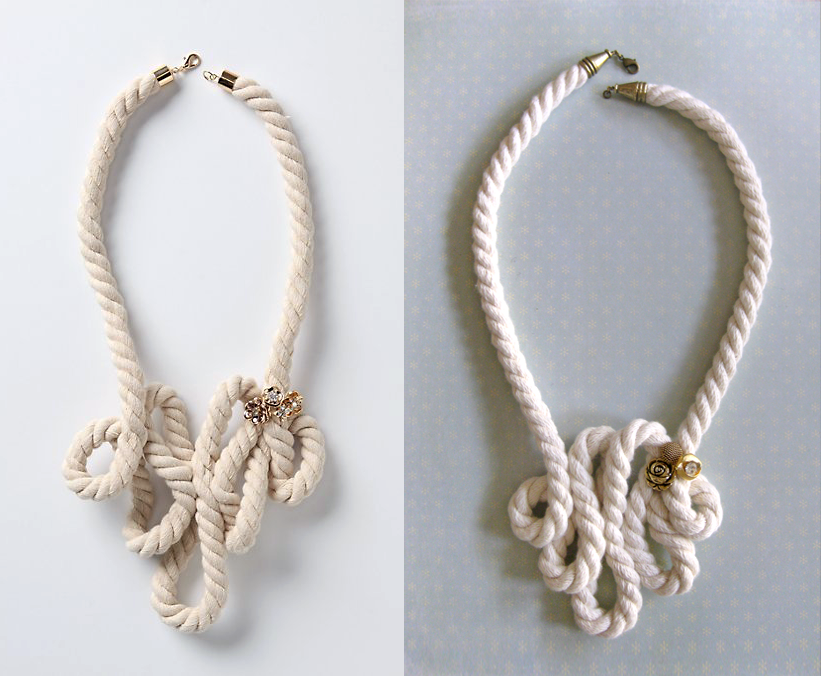
The original design (shown left) was also a little large for my liking, so I was excited to modify the concept to my daintier and more structured tastes. And while I love the nautical fashion style, I have yet to really jump in, so this piece felt like the perfect place to start.
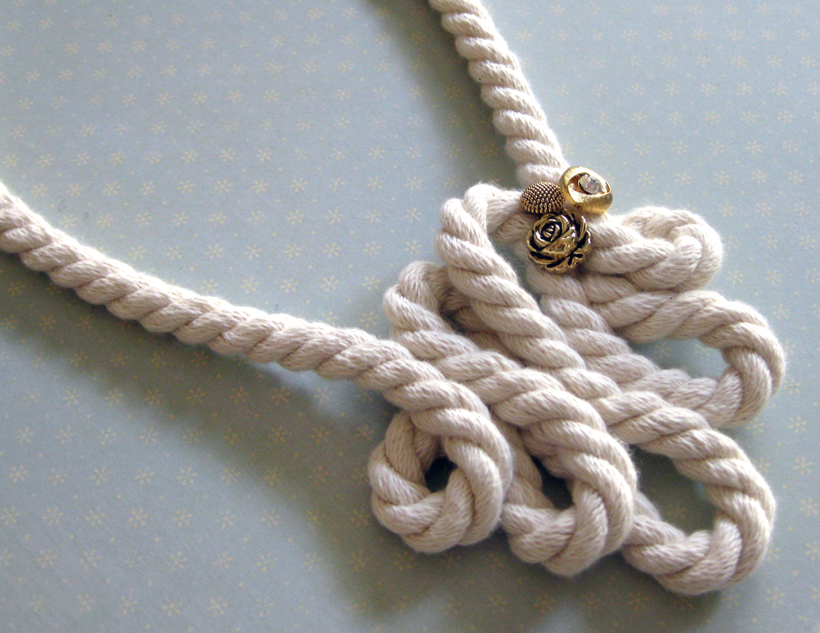
At first glance, the necklace looks to be made of rope, but upon inspection I realized it’s actually made of soft cotton piping cord used for upholstery, which is much more pleasant on your skin than rope would be anyways!

A few basic materials and less than an hour of time are all you need to create your own Curls & Coils Necklace.
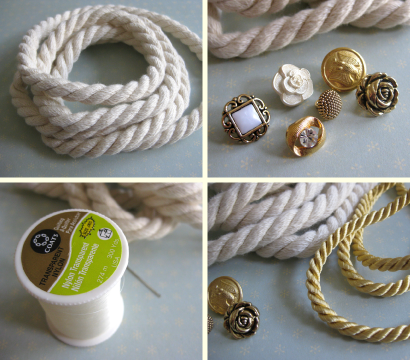
What you’ll need:
Cotton Upholstery Cording (1.5 – 3 yards depending on how long & loopy you want it)
Transparent Nylon Thread
Buttons or beads for embellishment
End caps/cones
Craft glue
Wire or head pins and a clasp

While I used the same raw cotton style cording as the original necklace, you can find many sizes, colors and materials that would work equally as well. I especially love the satin cording and picked up some in a lovely mustard yellow that I think will be just awesome! I purchased all my materials at JoAnn Fabrics.

Begin by approximating your loop pattern and determining how much cording you will need. For reference, I used a 1.5 yard piece and had about 4″ left on either end when I was done. Better too long than too short!

Be sure to leave a long enough tail before you start sewing your coils. Starting and ending on the back of the necklace, begin tacking your loops in place with a few stitches. It doesn’t take much to hold it together and if you place the stitches in the ‘grooves’, you can’t see them at all.
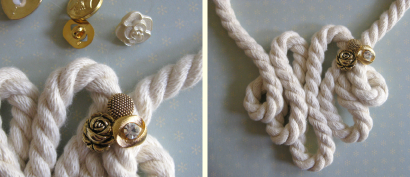
Next, decide on an arrangement for your embellishments and stitch them in place. I wanted mine a little less ‘blingy’ than the original so I used a plastic rose shaped button along with a simple gold metal one and one with a small rhinestone.

Once you finish sewing the loops and embellishments, determine the length you’d like the necklace and trim the ends about an inch shorter to account for the length the clasp will add.

To finish the ends, I used brass cones that I also found at JoAnn Fabrics. Using a ball end head pin or a piece of wire, fashion a loop on both cones for attaching the clasp.

Apply a few dabs of craft glue to the end of the cording and begin twisting into a point. Warning – this will make your fingers messy! Allow the glue to begin drying a bit and then continue shaping. You can also twist the cone onto the end to help shape it. Once you have a good point, apply a little more glue then twist the cap on, getting all loose ends tucked up underneath.

Add your clasp and voila!
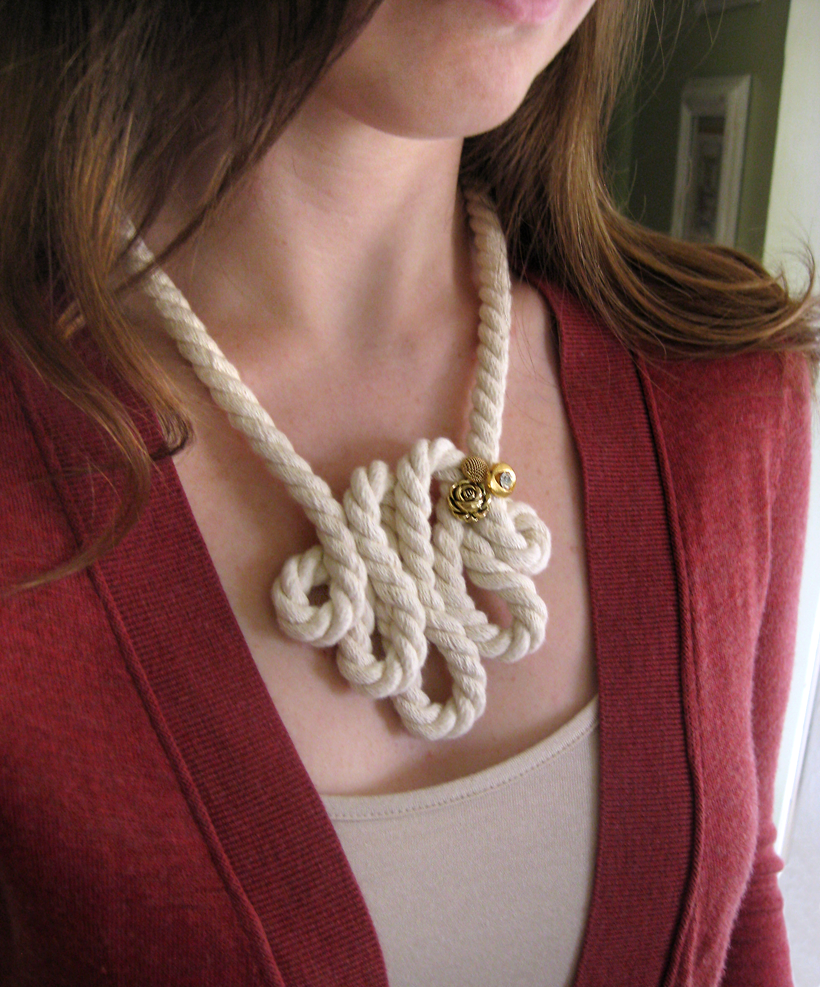
Liven up a simple cardigan or sun dress or accent a nautical striped tank top. Soft and lightweight, this necklace is the perfect year-round statement piece!

You can also apply this idea to other accessories such as a bracelet or belt – get creative! I’d love to hear if you try your hand at this project and how it turns out. Happy crafting!

Crafting: Fabric Rosettes

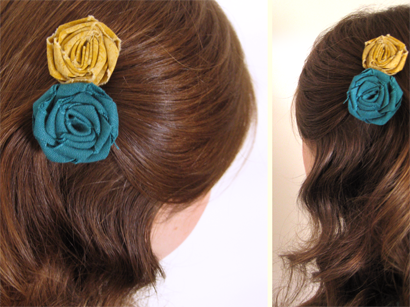
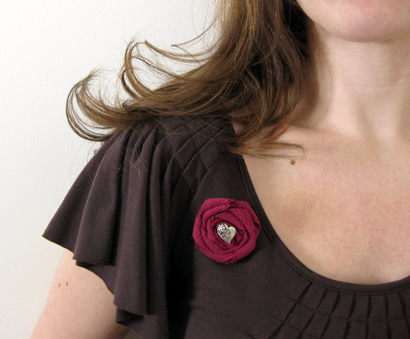
I’ve been doing a lot of cooking and not as much Crafting here lately, but I’m back on track and have a fun little project for you that satisfies my love of both accessories and fabric. It’s also perfect for making Valentine’s Day gifts for your friends and family or just for yourself! Today’s tutorial shows you how to make fabric rosettes which can be used on brooches, hair clips, necklaces, home decor projects and more.
What you’ll need:
fabric
felt
cardstock
pins
scissors
iron
craft glue (I use E9000)
pin backs, hair clips, bobby pins etc
buttons, beads, misc embellishments (optional)

Start with a strip of fabric 1″ by about 20″ – 25″. (I cut a 1″ strip the height of my fabric, then cut it in half. Many fabrics are 44″ so you end up with a 22″ strip, but some do vary which is ok.) You’ll need one strip of fabric per rosette.
Fold the strip in half and press with an iron.

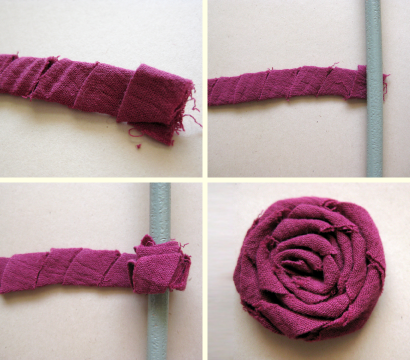
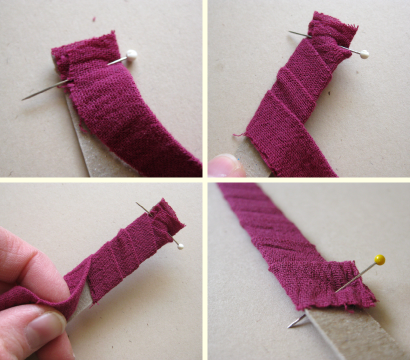
Cut a piece of cardstock (or cardboard) 1/2″ x 11″ (or the height of your stock). Pin the folded fabric strip to the cardstock and begin wrapping it around on an angle, not too tight. Secure the other end with a pin and press with the iron.
Once completely cooled, slide the cardstock out, keeping the wrapping as is. Fix any spots as necessary and press again with the iron.
To form the rosette, roll the strip around a pencil starting at one end. Once rolled, slide the pencil out and begin to shape the rosette by spreading it out a bit and twisting the center with your fingers if needed. Secure the loose end on the back with a pin and lightly press again with the iron to flatten it a bit.
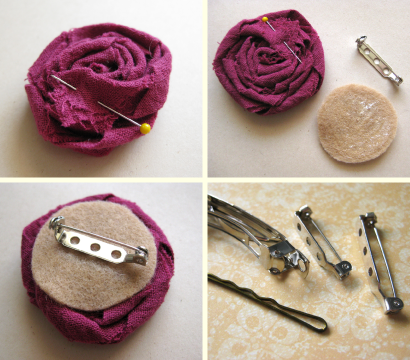
Depending on what you will be doing with your rosette, you can either stitch it together or you can glue it to a piece of felt (remove the pin before glueing). Ideally you’ll want to use a piece of felt that is close in color to your fabric but I just used what I had on hand.
You can then glue or stitch a pinback, bobby pin or hair clip to your rosette or sew it onto a shirt, bag, etc!
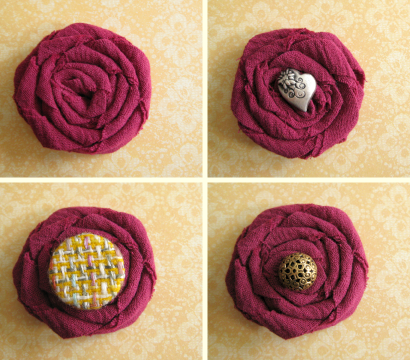
While I love the look of the simple rosettes by themselves, you can also embellish the center with buttons or beads which can be glued or stitched into place.


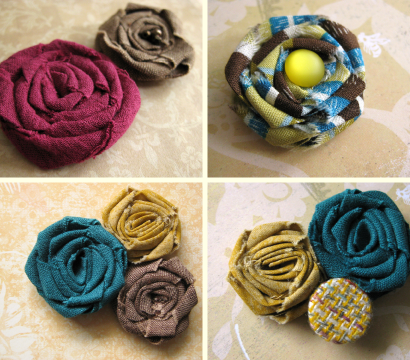
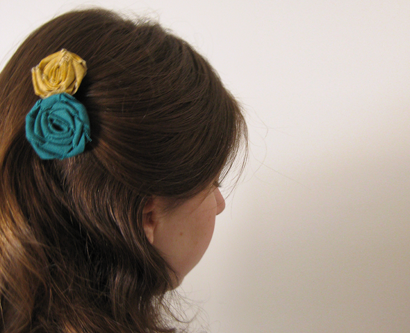
You can create rosettes in different sizes by using a longer or shorter piece of fabric or wrapping them tighter or more loosely. You will also find the type of fabric you use will affect the size of the finished rosette. Above can see how different embellishments really change the look of the finished piece.

If using more than one rosette on a hair clip, brooch or necklace, glue them to a piece of felt and trim the excess felt once dry (shown a few photos up). You can then embellish and glue to a hair clip or add ribbon or chain for a necklace.
These would also be darling stitched right onto a tank top strap, across the top of a tshirt or onto one side of a cardigan. Oh, the possibilities!

A variety of materials, colors and textures creates a nice grouping and you can also add other elements, such as buttons or charms, to create a unique cluster or fill any gaps between rosettes with beads, pearls or scraps of trim and lace. Just have fun and experiment! And if you do, I’d love to hear about it. Happy crafting!

Crafting: Ruffle Necklaces

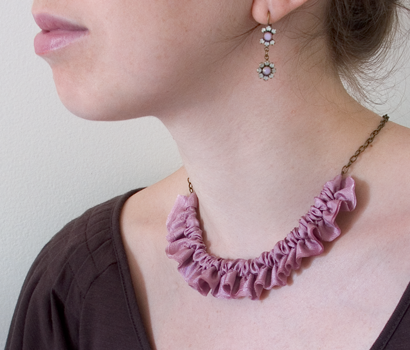
I’ve been swooning over the Candace Ang ruffle necklaces I’ve seen in magazines, but since I don’t have $200 to drop (and you probably don’t either), today’s project is an easy way to make one for yourself! It’s fast, you don’t need much and the results are just beautiful.
I used silk fabrics for this project but you could use any fabric that is thin enough to ruffle easily. Once you choose a fabric, you’ll need to pick a chain. You can use a chain you already have, deconstruct a piece of vintage jewelry or you can buy lengths of chain from your local craft store, in which case you will also need a clasp and some jump rings.

You will start by cutting a strip of fabric and the size will be dependent on the chain you are using, how many ruffles you want and how big you want them. For the pink necklace, I used a smaller chain and wanted shorter ‘tails’, so I cut the fabric to 2″. For the patterned silk shown above, I chose a chunkier chain so cut that piece to 2.5″. The fabric was in half yard pieces so I left the length as it was at about 18″.
Once cut, you can seal the edges of the fabric with Fray Block, Fray Check or another similar product, or heat seal them, if desired. I left the pink edges untreated because I don’t mind a little fray!
Fold the fabric strip in half and pin in place.
Next you will sew a sleeve for the chain. Be sure to make it large enough for the chain to fit through will a little extra room. When sewing, leave about 6″ of thread at the beginning and end and do not backstitch.
To create the ruffles, pull on the back thread (the bobbin thread) while scrunching up the fabric. It takes a little work to get the entire length ruffled but it will happen! I scrunched the fabric down to about a 7″ length. Knot the ends of the strings and trim them flush.
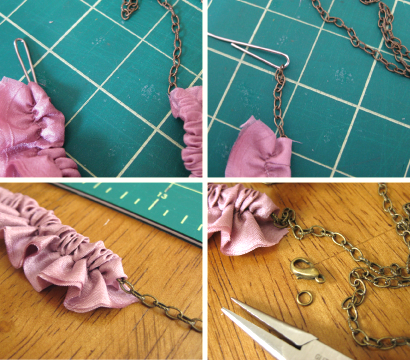
Next you will feed your chain through the pocket. You can use a safety pin or bend a paper clip to help feed the chain and it works best to have a rounded edge at the front so it slips through the fabric easier. If you are using a vintage or existing chain, you may need to remove the clasp or closure from one end to fit it through.
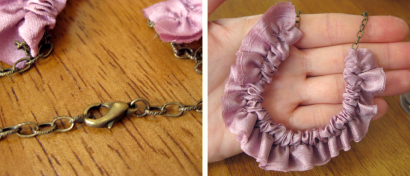
Once the chain is through you can attach (or reattach) your clasp. You can find clasps and jump rings in different metal finishes at most craft stores and you just need one or two pairs of needle nose pliers. You then have your finished necklace! 
You can easily modify this design by using different sized fabric strips and different styles and sizes of chains, the possibilities are endless! Use luxurious silks and satins for a fancier look or try springy lightweight cotton prints for a more casual piece. You can also sew on embellishments such as pearls, bead, rhinestones or fabric flowers.

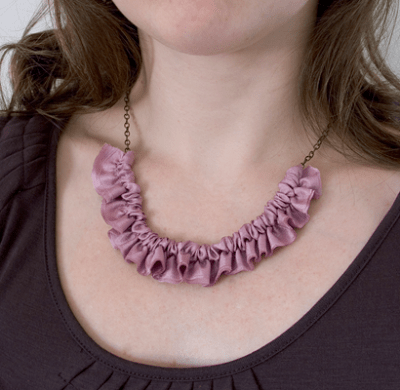
You could wear this necklace with a cocktail dress for a special occasion or with your favorite tshirt and jeans. It looks great worn as a choker like in the very top photo and also looks nice worn longer with a scoop neck shirt or off the shoulder top.
I have a couple more of these in different styles and sizes started that I did not have time to finish, but I will post some photos as soon as they are done. Maybe I’ll even give one or two away! I’d love to hear if you try your hand at this project, I hope you enjoy it!

Crafting: Button Bracelets

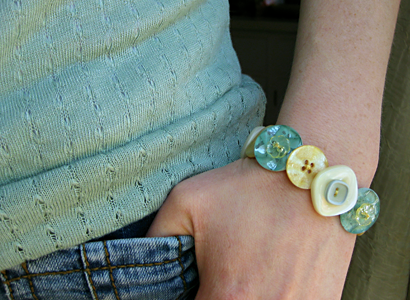
Love buttons? Who doesn’t?! Chances are, whether you are crafty or not, you have a stash of them laying around, or maybe an addiction to collecting vintage ones. Well today I have a simple project that will put them to good use, button bracelets! You can also use new buttons for this project, and these days there are so many cool ones available at your local fabric store, the design possibilities are endless.
What you’ll need:
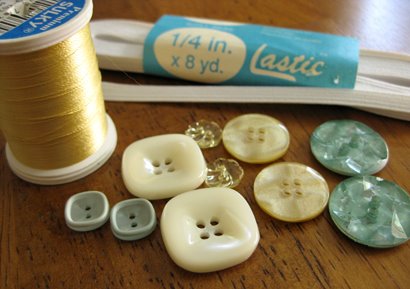
Elastic, 1/4″ or 3/8″ thick
Buttons
Needle and Thread
I decided on a yellow and seafoam green color palette for my bracelet, using a mix of some chunkier vintage buttons I have collected and a few new ones I purchased to match. You can use a repeating pattern or all one-of-a-kinds and I think it adds interest to stack some of them, so keep that in mind when choosing your buttons. I also chose a gold thread that I thought would be a nice pop, but you can match your thread to each button or even use clear nylon thread.
Start by wrapping the elastic loosely around your wrist where you would like the bracelet to sit. Cut it to size with about 3/4″ or so of overlap. Make a small mark on the elastic right past the overlap. I also find it helpful to mark the middle.
With the elastic laid flat as a guide, make a rough layout of your button placement to determine the design and how many buttons you will need. Do not include the end past your mark, see photo above for reference. You want the buttons to overlap each other a little so account for this when setting them out.
Once your layout is ready, you can sew the elastic together securely, forming the bracelet. I did this by hand but you can use a sewing machine if you choose.
Next, begin sewing the buttons in place, one at a time, starting at your marked center of the bracelet. Be sure to securely knot the thread after each button is attached. Above I show a method I find to be really easy and secure. Thread the needle up under the stitches, pulling the string through, then thread the needle through the resulting loop, under the thread closest to you and pull tight. Repeat this a few times.
As I mentioned, you want the buttons to overlap each other a bit so you do not see the elastic when you are wearing it. I find it helpful to just put one stitch through the button and try it on to make sure you like the way it is laying, then finish stitching it in place. As you go, you may also decide to change your button layout.
Continue adding buttons until you cover the bracelet and you’re done! It may take a bit of adjusting to get them to fit properly toward the end, but just be flexible with your design. You can always move or replace a button pretty easily if needed since they are all sewn on separately.
I love this project because it’s easy, inexpensive and a lot of fun. I also think these bracelets would make really sweet gifts, so if you’re on my christmas list, you’ll be getting one of these and some teabags
If you try your hand at this project, I’d love to hear about it! I’ll also be starting a flickr group soon for sharing your own craft project photos, so I’ll keep you posted on that. In the meantime, have fun crafting your own button bracelets!