I’ve been doing a really good job accomplishing the goals I set for myself lately (probably because they have all been crafty and fun, but… still counts for something in my book). I saw the nooodlehead cargo duffle bag pattern last year and immediately put it on my to-do list. With holiday gifts finished and the encouragement (and 24/7 on-call help) of my friend, Sandra, it was game on!
I hope to finish my bag this week (update: finished my first one, pics below, more to come!) and will write more about the project then, but in the meantime I wanted to share a little tutorial. While browsing pictures of other peoples’ bags, I came across this post on Thread Riding Hood on how to modify a two-way zipper to open from the center, but it only applied to a plastic zipper and mine was metal.
Since I had extras, I decided to try an experiment which happily ended in success! (Those are the best kind of experiments, aren’t they?).
The cargo duffle I’m making calls for a 26″ coverall zipper, but this tutorial would work on any length two-way zipper for any type of project, as long as the teeth are the same on both sides.
A coverall zipper is made for just that, coveralls, and is a two way zipper designed to unzip from both ends. Since I’m not usually hangin’ out in coveralls, I most typically see this type of zipper on coats (which I think is SUPER handy, by the way).
But when it comes to a bag, it’s much more convenient to have the zipper open from the center, so here’s how to do it. You’ll need a pair of side cutters, or similar small wire cutters with a pointy end, and needle nose pliers. (Click on any photo for a larger view.)
I was able to modify this zipper because the teeth are the same on both sides, as I mentioned. I’m no zipper expert, but it’s my understanding that this is not the case with all zippers so be sure to check before tearing one apart.
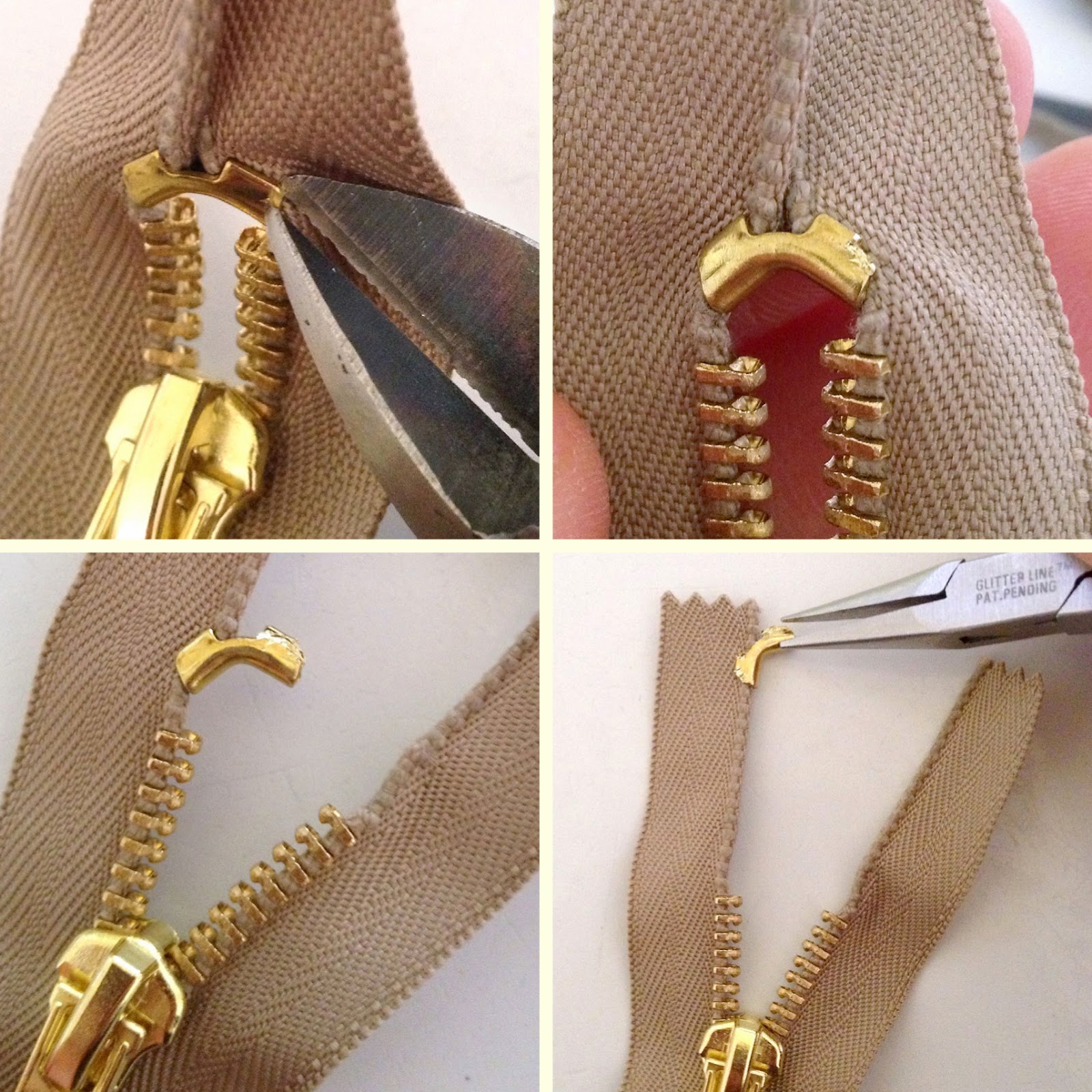
The first step is to remove the stoppers from both ends.
They are clamped down pretty darn tight (which I guess is a good thing) so this was harder than I expected it to be, but it just takes a little elbow grease and patience.
Start by carefully wedging the tip of your cutters under one side of the metal stopper and clipping off little bits of metal at a time. Be careful not to snag or cut the fabric tape.
Keep snipping away until you loosen the clamp enough to pull the stopper from the tape. Once it is free on one side, you should be able to slide it up and off the other side. If it is too tight, repeat the same process of clipping the metal away until it’s free.
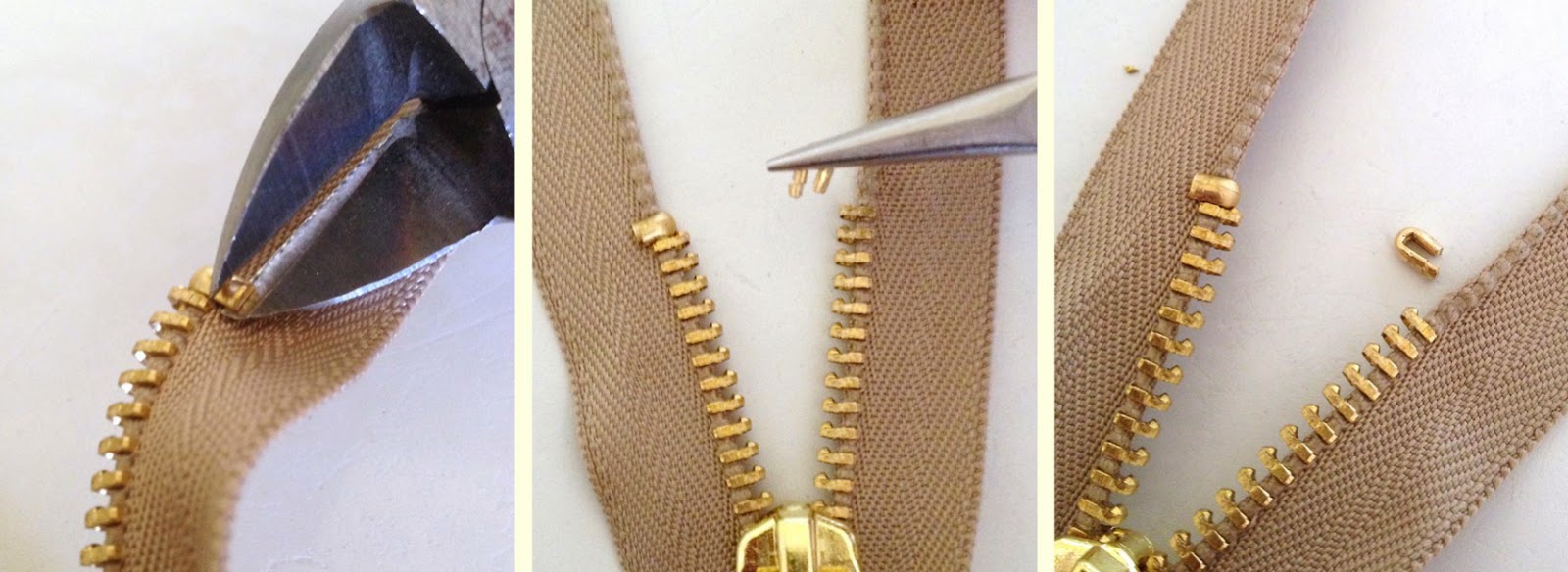
The stoppers on the other end are thicker, but are also easier to pry off. First wedge the tip of your cutters underneath and try snipping. If the metal is too thick for your cutters, a bit of wiggling and prying should loosen the clamp enough to be able to pull it from the tape.
Repeat on the other side.
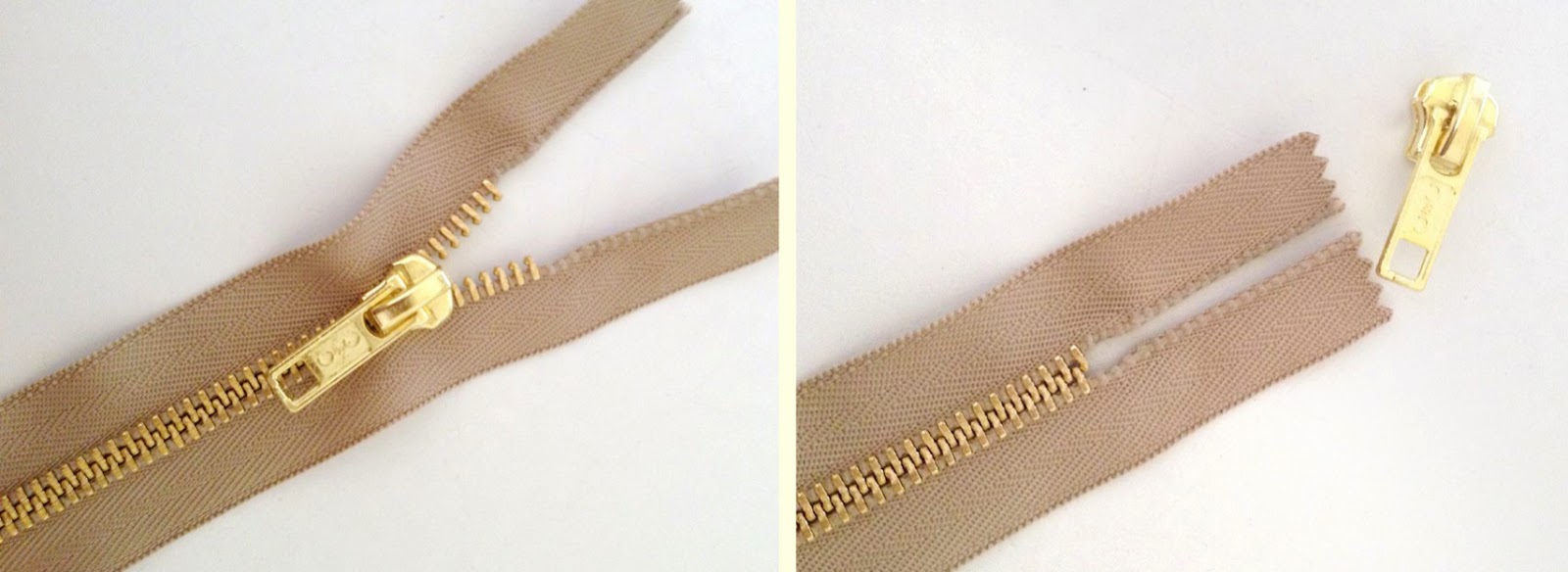
Once the stoppers are removed, move the sliders toward opposite ends so the zipper is closed and pull one slider off as shown above. It doesn’t matter which one.
The opposite end of your zipper will still have the other slider attached. Keep it on and pull it down to open the zipper a bit.
You will now put the loose slider you removed onto this end (toward the slider still on the zipper) by inserting the ends of the fabric tape into the channels of the slider and pulling it down until it catches the teeth, making sure they are lined up.
And Voila! Both your sliders are back on and your zipper now opens from the center.
Depending on your use for the zipper, this may be your final step, but be aware that the sliders are free to come off either end. If you are not sewing your ends into your project or if you have large gaps, you’ll want to make a tack stitch at the ends of the teeth or sew a piece of fabric onto the tape ends.
In the case of the cargo duffle that I’m making, one huge bonus of this modification is that I can take my zipper apart and sew the two sides on independently without having to maneuver around the sliders or deal with the bulk. Go ahead, pump your fist in the air and yell awesome!
If you do this, I recommend marking the ends of your tapes so you can put them back together properly. Technically, the teeth will go back together either way and there is no top, bottom, front or back with this specific zipper, but the length of the fabric tape is different on the two ends so they will be uneven if not matched up the same.
Once you’re done sewing, you just slip your sliders back on either end toward the middle and huzzah! Magic.
I hope you find this tutorial helpful! If you have any questions, just leave a comment below and I will do my best to answer them.
Thanks for visiting and happy sewing!
{UPDATE}
Since writing this post I have finished my first cargo duffle, hooray!
I certainly hit a few hiccups along the way and learned some important things to change and modify on the next one, such as adding zipper tabs on the sides, reinforcing the handles and using sturdier interfacing, but for my first bag project EVER I’m so thrilled with the results! I’m almost finished with my second duffle so will share more then.
p.s. I’m lillyellasworld on instagram if you’d like to follow and see my progress!
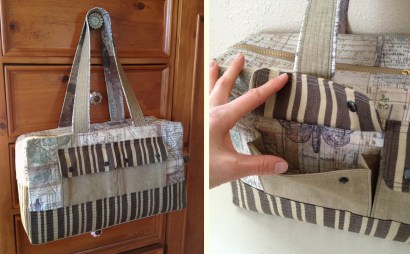
{Fabrics used: Main body, bottom accent and pocket flaps are Tim Holtz Eclectic Elements – Melange and Ticking Stripe. Pockets and handle accent are Robert Kaufman Quilters Linen in taupe}



































 lillyella