Undercover Maker Mat Pattern

Undercover Maker Mat free pattern | lillyella stitchery

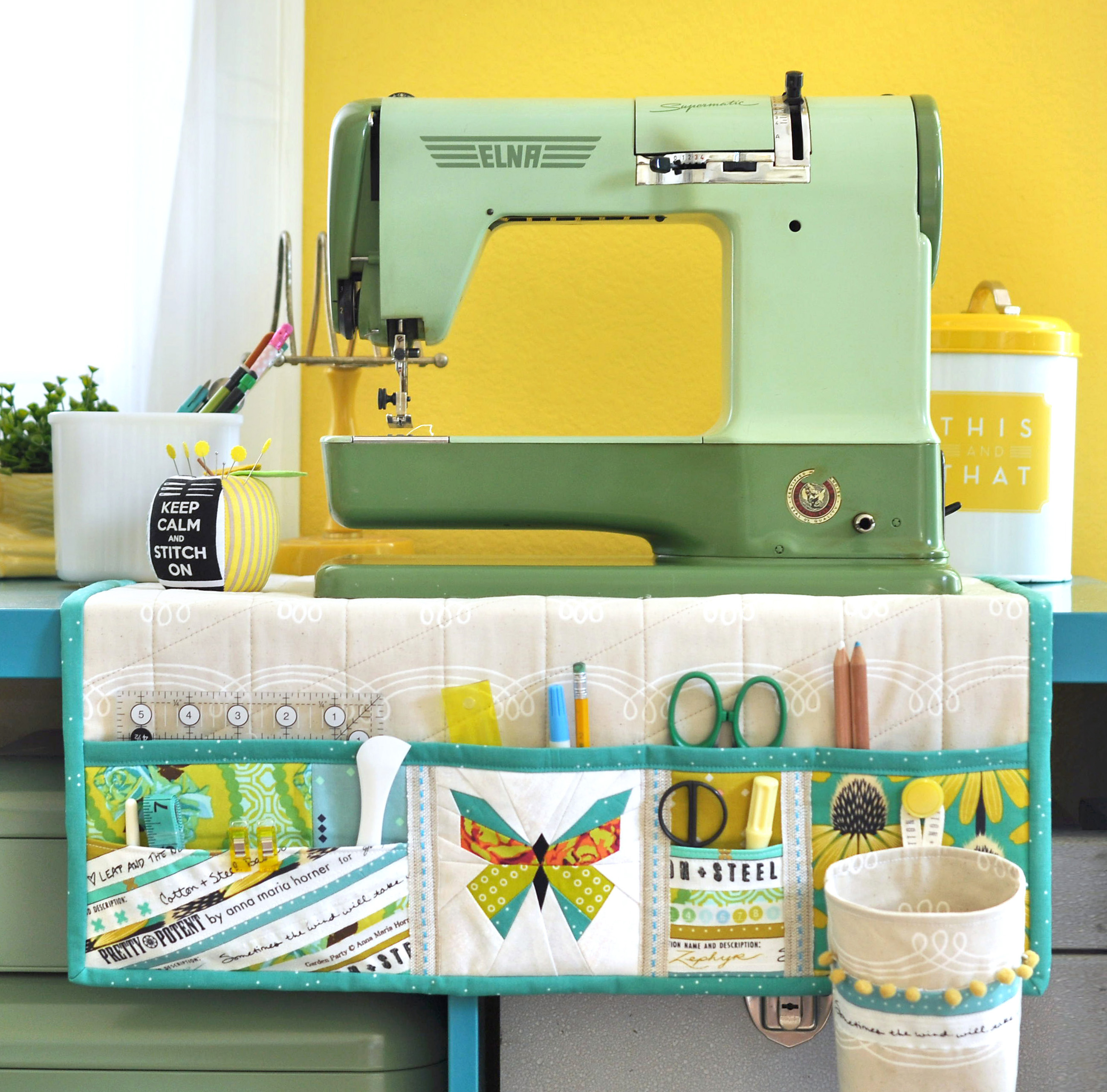
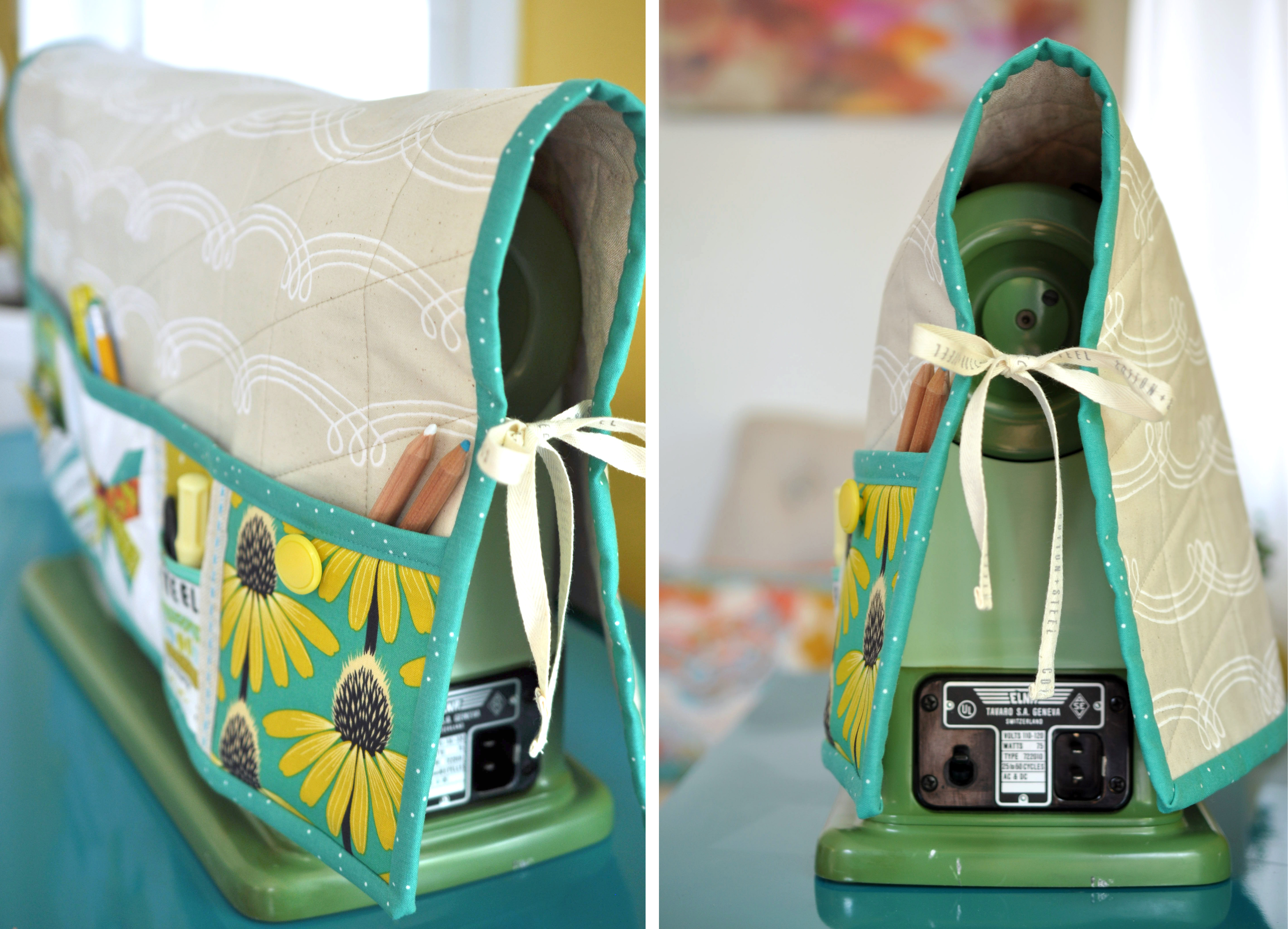
This dual purpose sewing space organizer has double pockets and a removable thread catcher to keep all your notions at hand and your workspace tidy. It goes from under to {machine} cover when not in use with side ties to keep it in place.

Undercover Maker Mat free pattern | lillyella stitchery

Click here  to download the PDF pattern.

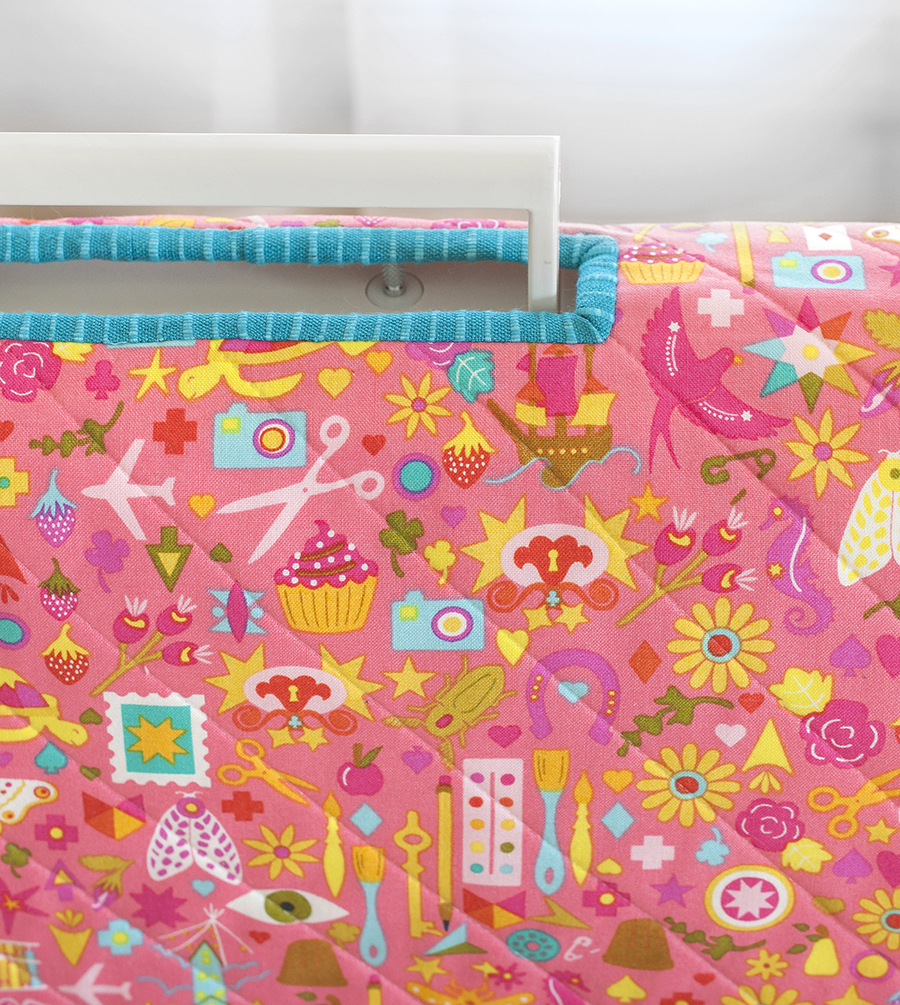
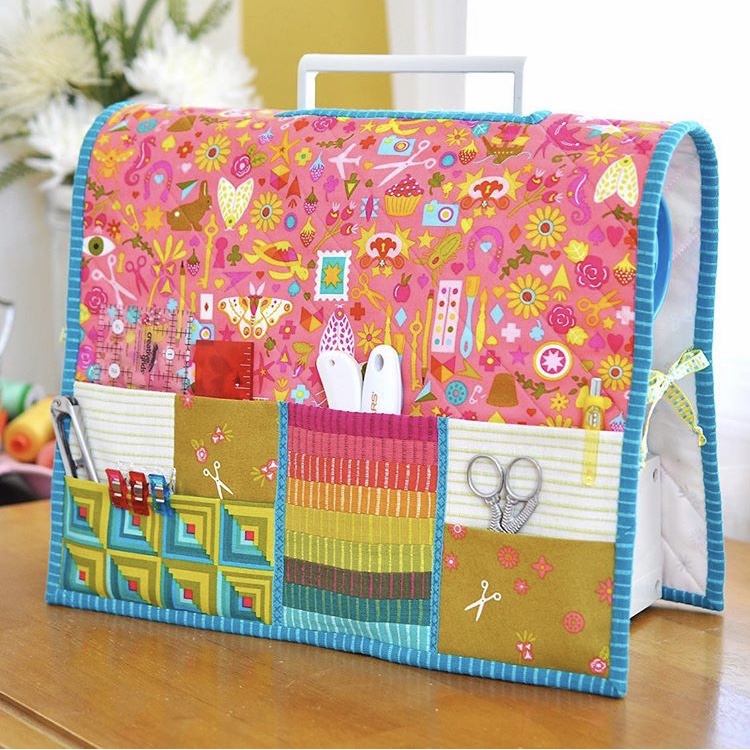
I also shared a pattern hack for adding a handle opening to this pattern, shown below, if your sewing machine has a carrying handle and you can find the directions for that here.

I have hosted several sew alongs for this pattern and you can find the previous posts here, they contain some additional tips, tricks and tutorial links.

If you have any questions about the pattern, feel free to contact me anytime. Tag your photos with #undercovermakermat so everyone can be inspired!

Midnight Bite Treat Bag Tutorial

Midnight Bite Treat Bag Tutorial | lillyella stitchery

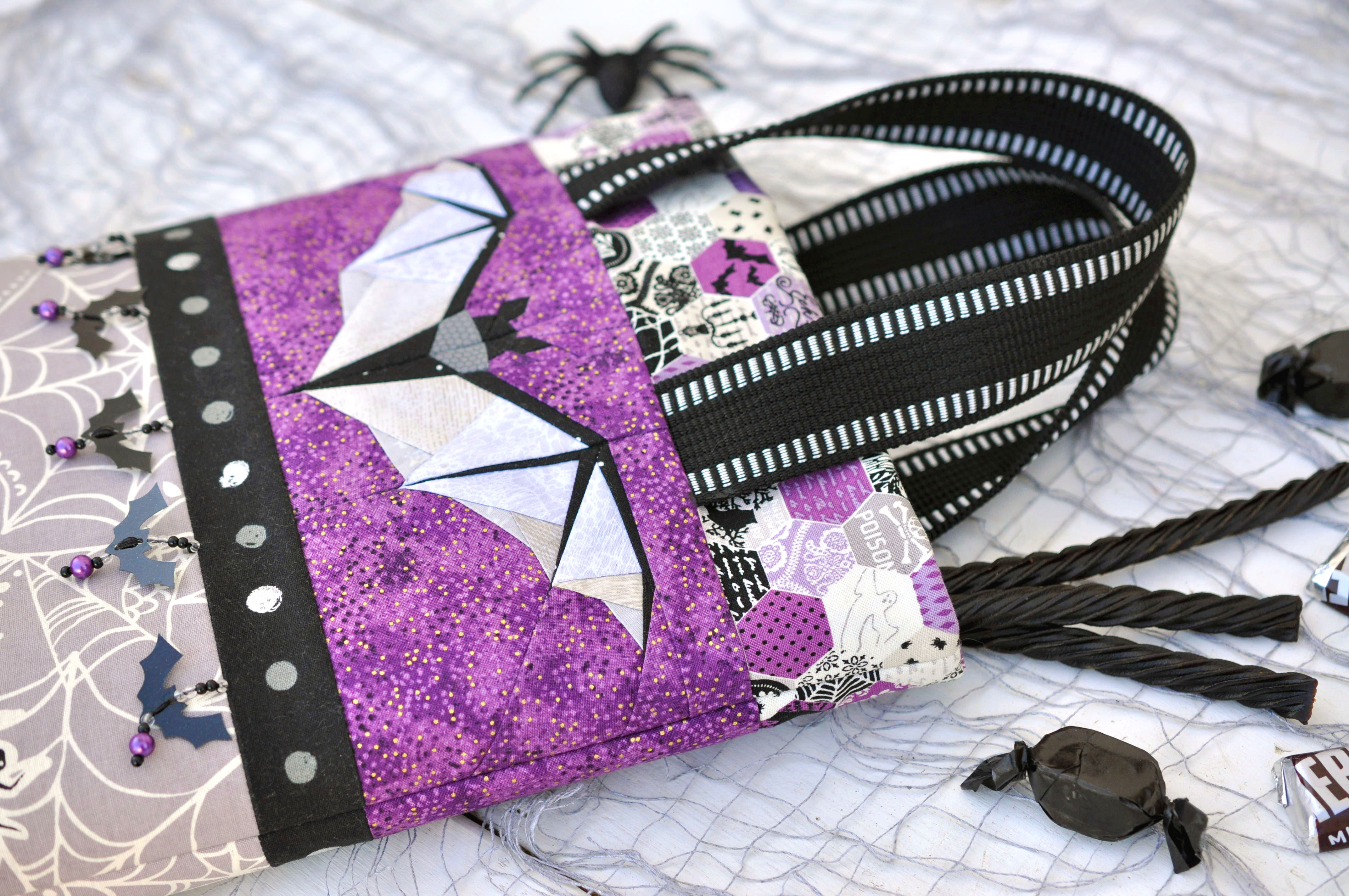
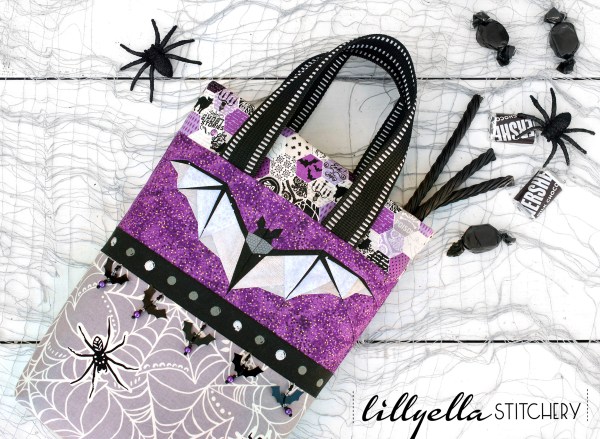
After falling in love with that hexie print, I found the matching purple fabric and there began my plan! When I pieced the 10″ Midnight Bite block, I just knew it had to become a treat bag. This project slowly came together as I found each new piece and it couldn’t have worked out better!

The handles are webbing I found in the trim section of Joanns, the silver is reflective so it’s perfect for night time candy hunting! Then there is the bat trim… I mean, come on! It’s even purple. No brainer. I also found this at Joanns. It’s made by Simplicity and was on an endcap of an aisle. There were spider pom poms too, which I also have big plans for.

Midnight Bite Treat Bag Tutorial | lillyella stitchery

This bag was quick and easy to make and can be customized in a variety of ways. You can use any fabrics, a variety of trims or fabric for the handles, and you can even adjust the measurements to modify the size for your preferences. It doesn’t even have to be just for halloween, it would make a perfect holiday gift bag!

This tutorial is really basic (because I have more bats to make!), but if you have any questions, just leave a comment below or shoot me an email. Please read thru the entire tutorial before beginning.

PREPARING YOUR BAG PANELS:

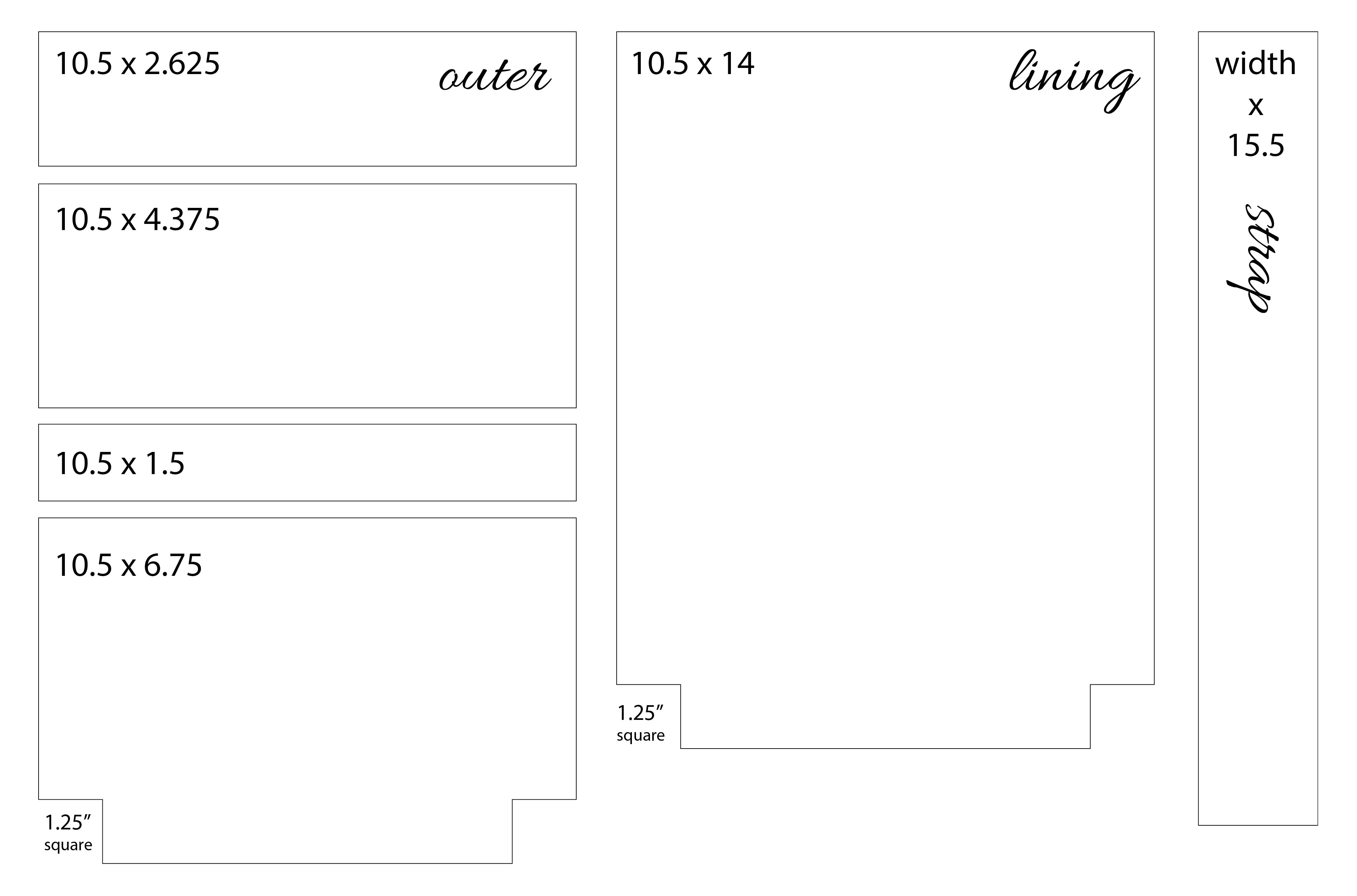
The finished size of this bag is 10″ wide x 12″ high x 2.5″ deep at the bottom with a 4.5″ drop. Below are the trim sizes for the outer pieced panels, the bag lining and the handles. You will need two of each piece. My handles are about 1.25″ thick but you can make them any size you wish.

My bag has a small boxy bottom. Simply eliminate the corner cuts if you don’t want a boxy bottom. You may also want to shorten your bag if you do this. I wanted my bag handles to be just long enough to slide over my hand easily and hang from my forearm, but not so long that the bag would drag on the ground if a little one was carrying it. You can adjust this measurement to be comfortable for you.

Midnight Bite Treat Bag Tutorial | lillyella stitchery

Begin by piecing the three bottom outer panel pieces with a 1/4″ seam. In my bag, this is the bottom spiderweb print, the strip of dots and the focal bat (*see ‘Adding Decorative Trim’ section below for options on how to add trim accents).

Midnight Bite Treat Bag Tutorial | lillyella stitchery

The focal bat panel is the 10″ block from my Midnight Bite pattern, the finished width is 10.5″ and I trimmed the height of the block to 4.375″. This odd measurement was simply based on how I visually liked the bat to be framed, you can make this focal panel any size, just be sure to adjust the lining measurement equally. The same applies to the top band of my bag (the hexie print), the measurement was based on the size of the hexies.

Next you will add the handle before piecing on the top band of fabric.
Midnight Bite Treat Bag Tutorial | lillyella stitchery

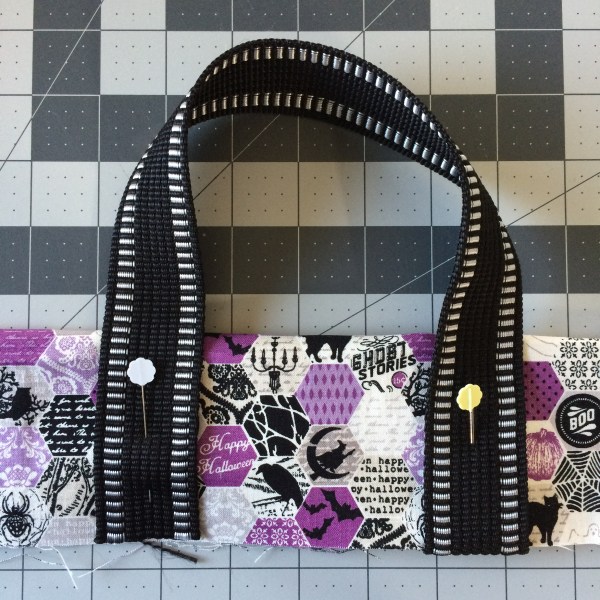
Lay your top fabric right side up, right reading. Lay your handle on top spacing the two ends equally from the center. You can line up your handles with the bottom edge of your fabric or drop the ends down about 1/4″ below your fabric to give a little extra grip in there. My finished bag has about 2.5″ between the handles (it’s shown a little wider in this photo which I took after the fact). Pin in place.

Next you will lay the pieced section of your outer panel right side down, upside down, on top of your handle piece, lining up the bottom edges. Sew along the bottom edge with a 1/4″ seam. I recommend going back over the handle areas a couple times and backstitching well on either side of them.

Press the larger piece down. NOTE: My handles could not be ironed, so be sure to test your material if you aren’t sure.

Midnight Bite Treat Bag Tutorial | lillyella stitchery

Repeat these steps for the other side of your bag. After my two outer panels were assembled, I used fusible fleece  on them to stabilize my bag and I love the feel of it. You can also use batting and then quilt your panels or do some edge topstitching to hold it in place. If you’d like a lighter bag, you can use a medium weight interfacing, but I do recommend using some type of interfacing on the back of your outer panels. I did not use any interfacing on my lining.

CONSTRUCTING THE BAG:

Next you will take your two outer panels and place them right sides together. Sew with a 1/4″ seam down the left and right sides and across the bottom. You corner cut outs will be open. Repeat these steps for the two lining pieces, but leave a large gap in the bottom seam for turning. Just sew about 1/2″ in from either end.

To sew the boxed corners, keep your pieces wrong sides out. Open up the piece a bit and fold one inner side seam down to the inner bottom seam, lining them up and lining up both cut edges of your corner cut out. Sew along the edge with a 1/4″ seam. Repeat for the other side of your bag outside and your lining.

To sew in your lining, turn the outside of your bag right side out. Keep your lining wrong side out. Slide the outside of your bag into the lining, the two pieces will be right sides together. Line up the top edges making sure to match the side seams and sew around using a 1/2″ seam.

Turn your bag right side out through the gap in the bottom of your lining. Stitch the gap closed and turn your lining inside your bag. Press around the top and top stitch if desired.

Midnight Bite Treat Bag Tutorial | lillyella stitchery

ADDING DECORATIVE TRIM:

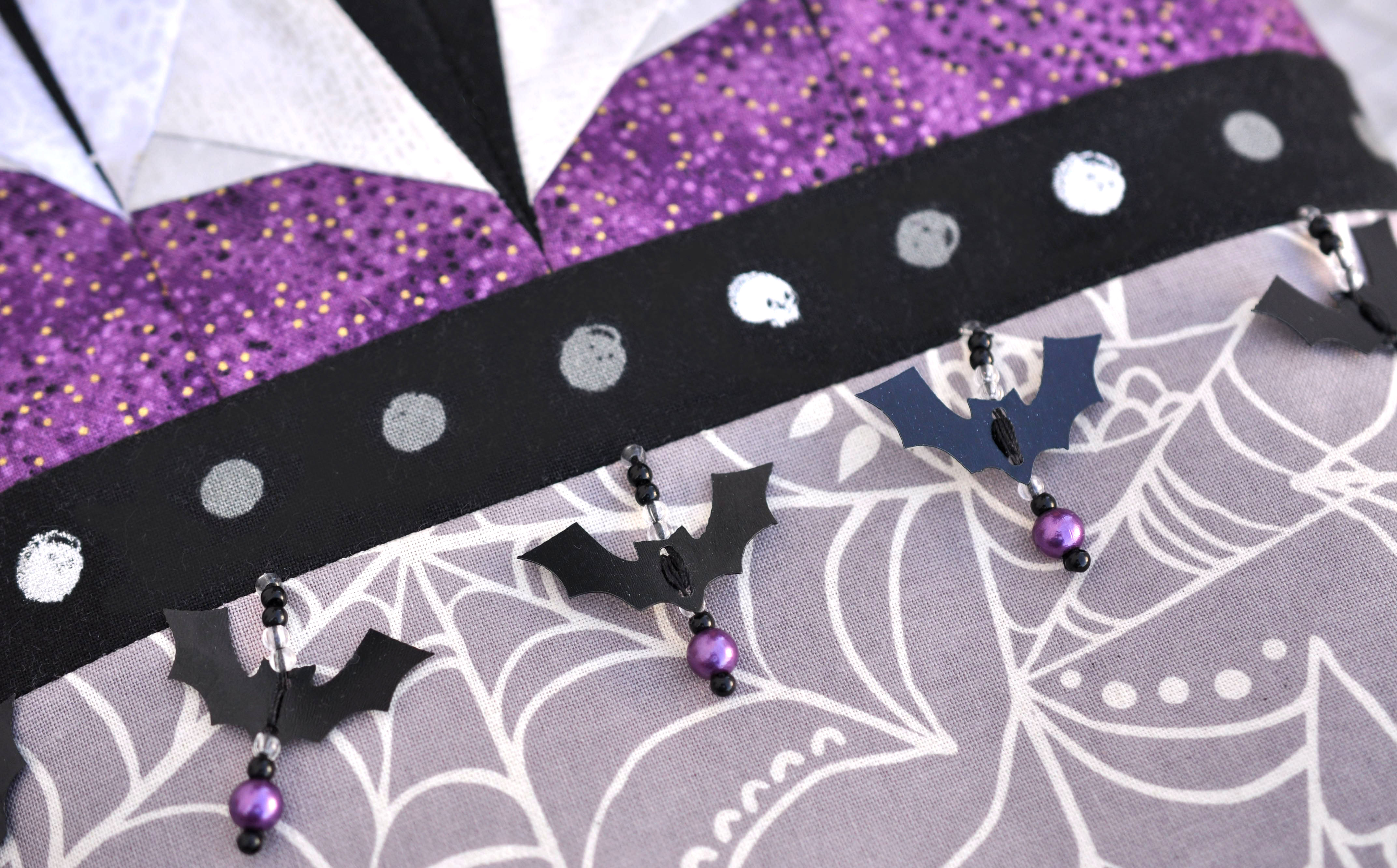
Once all the elements of this bag came together and I was planning the design (see a couple options I was tossing around below), I was going to stitch the bat trim onto the bag panels after they were pieced and then use a piece of woven striped ribbon on top. I liked the added design element but I also wanted to cover the satin ribbon the bats were on because it looked a little generic to me.

Midnight Bite Treat Bag Tutorial | lillyella stitchery

After texting about seven people for their opinions (ya, Im a high maintenance friend), I decided to keep it a little cleaner and just use the bat trim, but I did not want to throw off the balance of the black dotted fabric strip by having the black ribbon of the bats showing. Typically I would sew the trim into the seam, much like piping, but I was concerned about keeping it in place and hitting the beads with my machine foot. I also wanted the bats to fall evenly in line with my dots (OCD, I know). So I clipped the bats off the ribbon and restrung each one then sewed it in place on my bag panels. I did this after adding my fusible fleece to my pieced panels. Since there’s only five bats on each side, it went really quick.

FEATURED FABRICS:

The top hexie print is from the line Happy Haunting by Deena Rutter for Riley Blake (it also comes in orange and black!). I unfortunately have no idea what the purple background of my bat is. I grabbed it last minute at my LQS, but I’ll see if I can find it next time I’m up there. The Happy Haunting line has a purple print with tiny black spiders on it that would match and make a cute background, too. The black strip with the dots is Spellbound from Cotton + Steel and the bottom web print is from Spooktacular, Too (also in the newer Spooktacular Eve) by Maude Ashbury for Blend.

I hope you enjoy this tutorial, happy haunting, friends!

Midnight Bite Treat Bag Tutorial | lillyella stitchery

Disappearing nine-patch with sashing: a quick tutorial

DSC_0547 edit 2

When I first started quilting, I thought the disappearing nine-patch block was like magic! Before I knew anything about modern fabric or designers, I found a Flea Market Fancy 6″ charm pack at my very traditional LQS and got to work.

The traditional nine-patch was a little busy for me, but add some sashing and boom! I was in love. Quick, easy, and a perfect, fun block for charm packs or squares of any size.

Disappearing nine-patch with sashing: a quick tutorial by lillyella stitchery

So here’s a quick breakdown on how this goes together (and finishing this is high on my WIP list, so I’ll hopefully post a completed pic soon!)…

The charm pack I had was 6″ squares, but you can use any size squares, as well as any size sashing. My strips are 1.5″ cut for a 1″ finished sashing.

Disappearing nine-patch with sashing: a quick tutorial by lillyella stitchery

Start by sewing three rows of three squares each with sashing strips between.

Disappearing nine-patch with sashing: a quick tutorial by lillyella stitchery

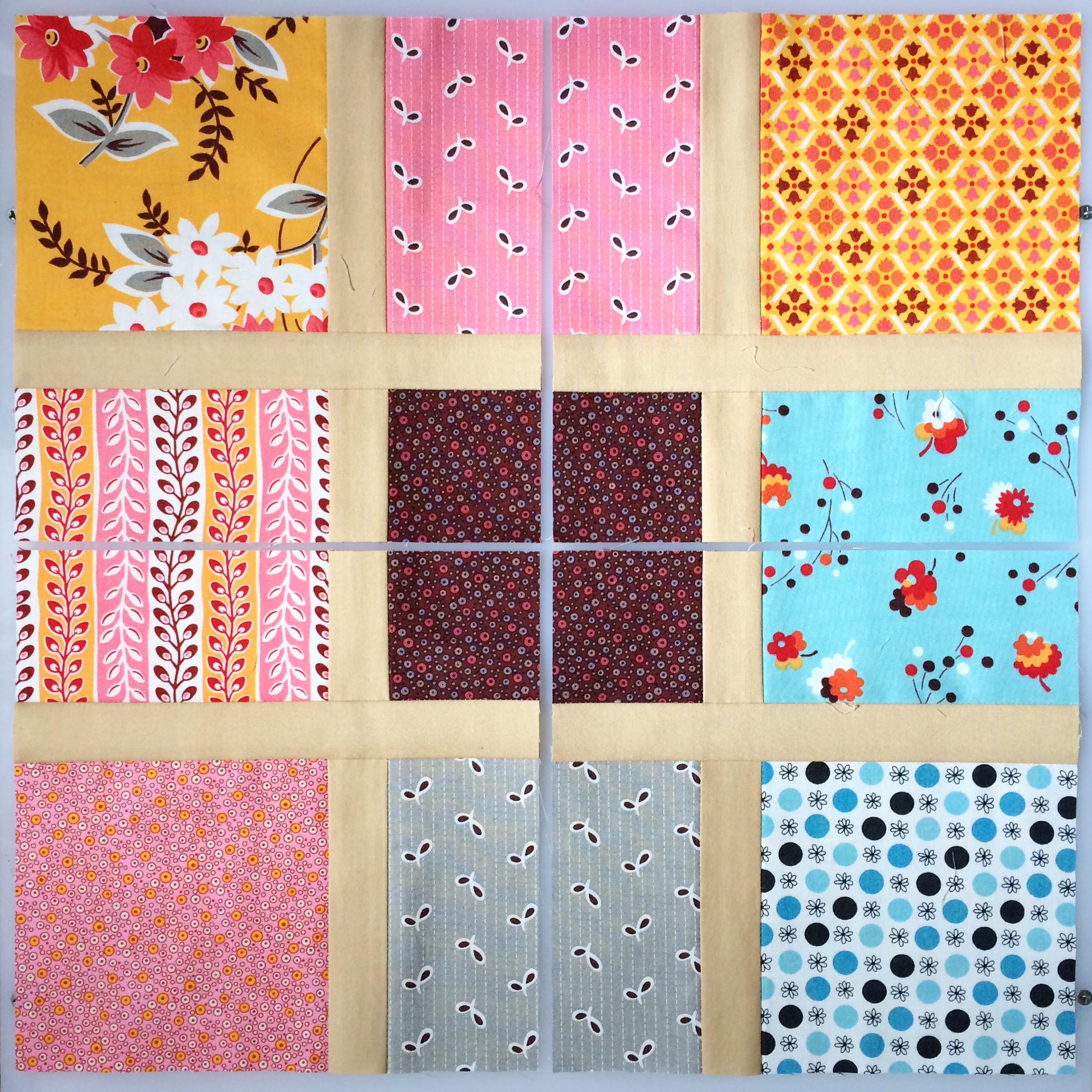
Next you will piece the three rows together with sashing strips to create your starting block and then cut it in half both ways to create four blocks.

Disappearing nine-patch with sashing: a quick tutorial by lillyella stitchery

You can now piece these blocks together, with or without more sashing, in any arrangement you like. They can all go in the same orientation for a symmetrical look or you can vary them. (The above pic is just a mock up if you’re wondering why my seams look funny!)

DSC_0643 edit 2

So there you have it! This simple block has so many possibilities. Use bold colors and black sashing for a stained glass window effect or try using big prints in just the squares that don’t get cut and use solids for the rest of the blocks and the sashing.

Sturdy Fabric Basket Tutorial

Goodness, I am just so excited to share this little project! I’m a storage and organization junkie, and of course I love fabric, so combining the two just puts me in a happy place. Making sure my surroundings are pretty and make me feel happy and inspired is on the top on my list (what list, no idea, but it’s important).
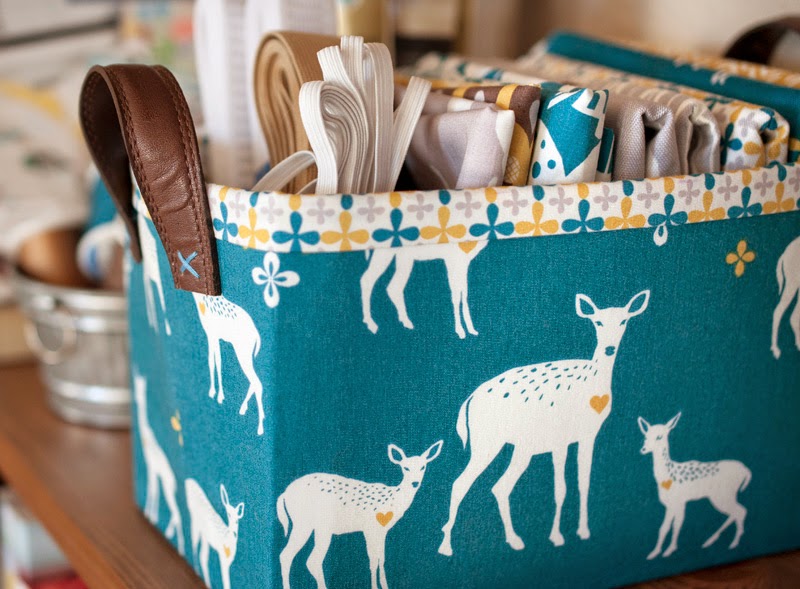
When I got my hands on this bundle of the new line Westwood by Monaluna, I knew I needed all these little critters hanging out with me everyday so I decided to make some storage baskets.
These baskets are really quick and easy to make and are fat quarter friendly (the largest piece you need is 17×15 so pull out those big scraps)! They are made sturdy with a layer of Peltex, but can also be made soft using fusible fleece or batting. You could even very easily sew this entire project by hand with no problem.
The handles shown here are made from a thrift shop leather belt I bought for 50¢ but you can also use scraps of leather (or pleather!). I love to deconstruct old bags, pouches, wallets and other various things I find for cheap to use on other projects. The handles can also be left off if you prefer.
I already have one hundred and one uses for these baskets in every room of my house, but right now I plan to make a bunch to fill with goodies and give as gifts! Aside from the holidays, you can fill one with food items and take to the host of a dinner party, baby items for a shower, fabric for ME… errr… I mean a friend. Shall I go on?
The pattern has been updated to include this super fun patchwork variation, too, AND instructions on how to make ANY SIZE basket you wish, from one inch to 1000 inches!
IMG_8082
You can download a PDF of the pattern by clicking HERE or the image below >
I hope you enjoy this pattern! If you have any questions, feel free to comment below or email me anytime. I’m on instagram as lillyellasworld – please tag me if you make one, I’d love to see it! You can also use the hashtag #sturdyfabricbasket.
And because I’m just curious I have to know, which do you like the better, the owls or the deer?!
Happy sewing, friends! ~nicole

EPP Table Topper Pattern

Free EPP Table Topper Template | lillyella stitchery
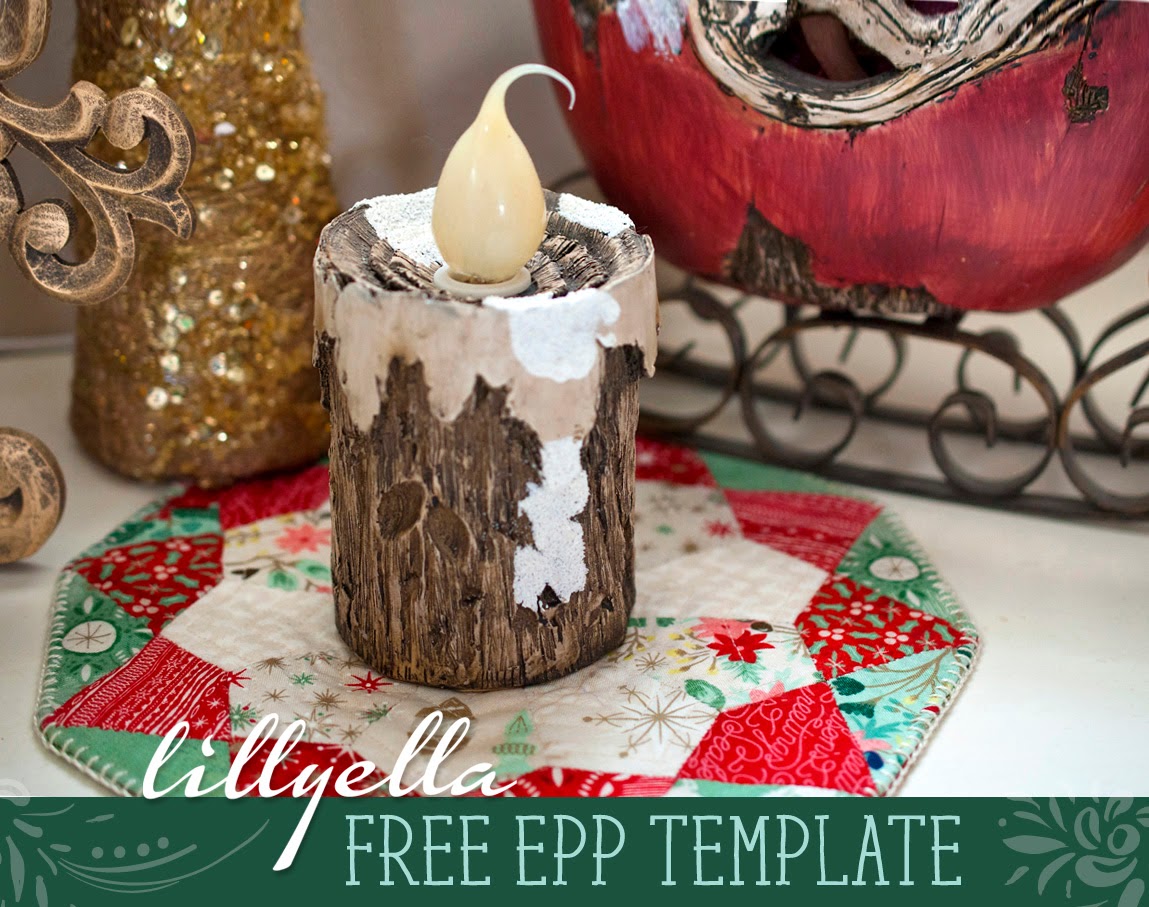
This pattern, or something like it, may very well exist somewhere in the world. But with my 25th & Pine charm pack in hand, I went searching for a small EPP pattern that would be relatively quick and had no luck, so I just drew one up.
I am by no means an english paper piecing expert and everyone has their favorite methods, so I’m just sharing my pattern templates here rather than a full tutorial. I will, however, provide some links to other tutorials for anyone who is new to EPP and explain how I finished my piece. The great thing about it is that all you need is fabric, a needle and thread – no sewing machine or experience is necessary.
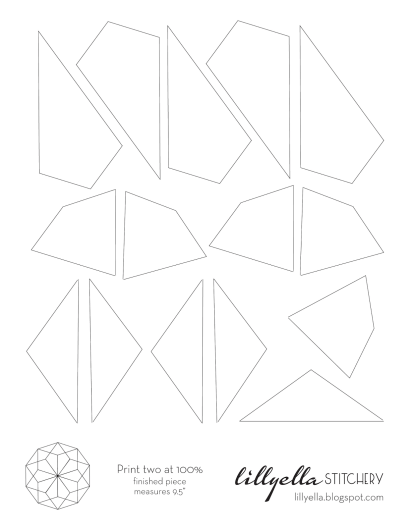
This pattern creates a piece that is 9.5″ wide and is designed to be charm square friendly (5″ fabric squares). You can get two center kite pieces from one charm square and more of the smaller pieces, but I used 5 white, 5 red and 5 green charms to create my piece. This pattern is also great for scraps, the biggest piece you need is about 2.5 x 5, but the templates can also be printed larger or smaller to create a different sized finished piece.
Free EPP Table Topper Template | lillyella stitchery
I made mine into a little table topper (isn’t it the perfect little mini tree skirt?!), but it would also be nice used on a pillow, as a trivet or on a bag. You can download a PDF of the templates by clicking the image below. You will need to print two sheets so you have ten of each shape.
I thread basted my pieces because I just haven’t gotten the swing of the whole glue basting thing yet, but that would certainly work, too. When sewing my pieces together, I followed the order shown below.
To finish my piece I removed the papers and cut a piece of batting to the exact size of my piece (you could also use insulbrite if you wanted to make a hot pad). I then unfolded the outer edges of the green pieces and pressed it well. I layered the piece and the batting and did some machine quilting on the center, but you could also do hand quilting or spray baste the batting in place and quilt after attaching the backing. I only wanted my quilting to show from the top.
I cut a piece of backing fabric slightly larger than my piece and placed the quilted top and back right sides together. I sewed around the outer edge, using the pieced top as a guide, with a 1/4 seam and left a couple inches open for turning. I trimmed the seam, turned the piece right side out and pressed. You could machine or hand quilt at this point if you wanted to see it from both sides.
Free EPP Table Topper Template | lillyella stitchery
I decided to finish my piece with a blanket stitch around the edge using a DMC pearl cotton and I love the way it came out. This also closed up the area I left open for turning. And voila! All done.
Here are some tutorials on english paper piecing:
Craftsy – English Paper Piecing from Beginning to End
All People Quilt – English Paper Piecing
Flossie Tea Cakes – EPP, where to begin
YouTube video – How to Finish an EPP Project
And you can find a good tutorial on how to do a blanket stitch here.
Free EPP Table Topper Template | lillyella stitchery
I hope you enjoy the template! If you have any questions, feel free to leave a comment below or send me an email anytime.
Free EPP Table Topper Template | lillyella stitchery